
Ward County, TX — August 16, 2025, Ismael Vela, Edwin Rodriguez Cortez, and two were injured in an 18-wheeler accident at 4:25 p.m. on I-20.
According to initial details, the accident happened just west of the town of Pyote along eastbound lanes of the interstate.
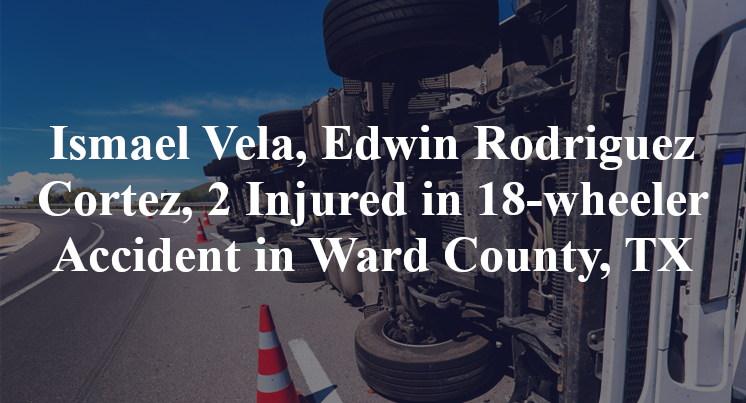
Investigators said that 41-year-old Ismael Vela was driving a Chevy Traverse on eastbound I-20. 31-year-old Edwin Rodriguez Cortez was a passenger in a Chevy Impala going the same direction. Authorities say that a Freightliner 18-wheeler was traveling at unsafe speeds, and it collided with both Chevys, as well as another 18-wheeler and a Kia.
Due to the accident, both Ismael Vela and Edwin Rodriguez Cortez had serious injuries. Two other occupants int he Impala had moderate injuries. No other injuries were reported. At this time, additional details are unavailable.
Commentary by Attorney Michael Grossman
When an 18-wheeler collides with multiple vehicles on a busy interstate, and investigators point to unsafe speed as a cause, it’s a sign that something went seriously wrong. But it’s a mistake to stop the conversation at the accused negligent truck driver. In commercial trucking, the most dangerous problems aren’t always behind the wheel—they’re behind the scenes.
If this truck was moving too fast for conditions and triggered a chain-reaction crash involving at least five vehicles, we have to ask: why? Was the driver inexperienced, fatigued, or distracted? Were they under pressure to meet a tight delivery window? Was their speed a matter of negligence—or the result of a system that encouraged or ignored risk?
I’ve handled hundreds of commercial vehicle accident cases, and unsafe speed has rarely been an isolated issue. It’s often tied to companies pushing drivers to cover too much ground in too little time. Some dispatchers demand on-time deliveries regardless of road conditions or traffic. Others look the other way on safety lapses, failing to monitor driver behavior or vehicle performance. And too many companies either skip meaningful safety training or simply assume their drivers will figure it out as they go.
That’s why it’s critical to investigate not just what the truck driver did, but whether they were set up to make good decisions in the first place. That means pulling driver logs, ECM data, dispatch records, and reviewing how the company monitors and enforces safety. Because when an 80,000-pound truck loses control, the consequences can be enormous—and the responsibility may go far beyond the person in the driver’s seat.
Key Takeaways
- A crash involving multiple vehicles due to unsafe speed demands investigation into more than just driver behavior.
- Trucking companies may contribute to unsafe driving through tight schedules, poor oversight, or weak training.
- Common systemic failures include pressure to meet deadlines, lack of route guidance, and ignoring safety warnings.
- Real accountability means examining whether the driver was set up to operate safely—or pressured into risky decisions.
- Evidence from dispatch logs, truck data, and safety procedures is key to understanding the full cause of the crash.

 call us
  Email Us
  Text us