
Apple Springs, TX — December 14, 2024, Ian Manatse was killed in a truck accident at about 5:45 a.m. on State Highway 94
Authorities said a 2016 Kenworth semi-truck was pushing another truck west of Apple Springs when it left the road for an unknown reason and rolled onto its side.
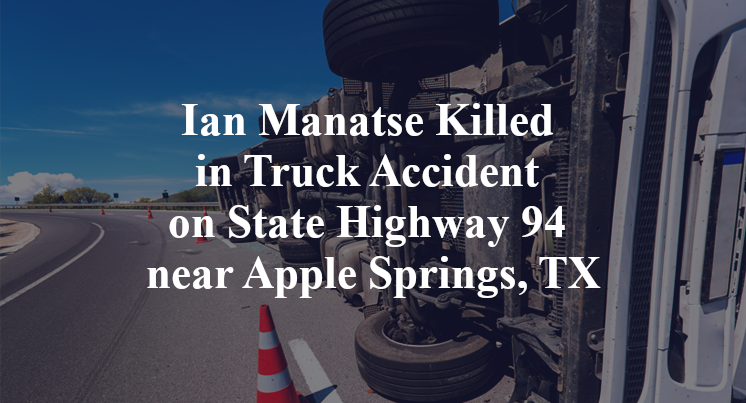
Ian Manatse, 43, of Conroe was pronounced dead after being taken to a local hospital, according to authorities.
The driver of other semi-truck, a 2023 Kenworth towing an oversized load trailer, was not injured, authorities said.
Authorities have not released any additional details about the Trinity County crash.
The crash is still being investigated.
Commentary by Attorney Michael Grossman
This crash, where a 2016 Kenworth semi-truck reportedly left the road while pushing another truck and rolled over, raises critical questions about truck operations, vehicle safety, and driver decision-making. Anytime a large commercial vehicle is involved in a rollover crash, the consequences tend to be severe, and uncovering the full story requires thorough investigation.
The fact that one semi-truck was pushing another truck is highly unusual and warrants immediate scrutiny. Was the second truck disabled, and was this an improvised attempt to move it? If so, investigators need to ask if this was an authorized or safe practice? Pushing another truck is not standard operating procedure and often presents significant safety risks. Was there proper communication between the drivers, or did coordination issues contribute to the crash? The second truck was towing an oversized load trailer, which likely added weight and complexity to the situation. Investigators must assess whether this load affected the handling or maneuverability of the truck being pushed.
Investigators also must determine why the truck left the roadway. Did fatigue, distraction, or impairment contribute to the crash? This incident occurred early in the morning, a time when drivers are particularly prone to drowsiness. Authorities should review the driver’s hours-of-service logs to determine if they were operating within federal limits. Did the truck experience brake issues, steering problems, or tire blowouts that caused the driver to lose control? Investigators should conduct a forensic examination of the vehicle to identify any mechanical failures. Were road conditions, such as wet pavement or poor lighting, a factor? Early morning darkness could have reduced visibility, complicating the truck’s maneuvering.
The circumstances of this crash suggest unconventional driving practices, which raises questions about driver training and company oversight. Were the drivers adequately trained to handle emergencies or non-standard operations like pushing a disabled truck? Did the trucking companies involved allow or encourage unsafe practices? Companies are responsible for ensuring their drivers follow safety protocols and avoid dangerous improvisations.
Investigators will need to reconstruct the sequence of events leading to the crash to understand how and why the 2016 Kenworth rolled over. They should scrutinize skid marks and debris patterns, which can provide insight into the truck’s speed and whether the driver attempted evasive actions. Reviewing data from the truck’s engine control module can reveal speed, braking activity, and steering inputs leading up to the crash.
This crash raises more questions than answers at this stage, particularly regarding the decision to push a truck towing an oversized load. Investigators will need to carefully examine the driver’s actions and decision-making, the mechanical condition of both trucks and whether the oversized load and pushing maneuver contributed to the loss of control.
Crashes like this underscore the importance of adhering to safe and regulated commercial vehicle operations. While we don’t yet know all the details, the circumstances — one truck pushing another with an oversized load — suggest a situation that demands close scrutiny. Determining what went wrong, and why, is essential to holding the appropriate parties accountable.

 call us
  Email Us
  Text us