
Dallas, TX — April 17, 2025, Hugo Hernandez was injured in a motorcycle versus hit-and-run car accident shortly after 10:30 p.m. along Illinois Avenue.
According to authorities, 31-year-old Hugo Hernandez was traveling on an eastbound Indian Motorcycle Co. motorcycle on East Illinois Avenue in the vicinity of the Fowler Street intersection when the accident took place.
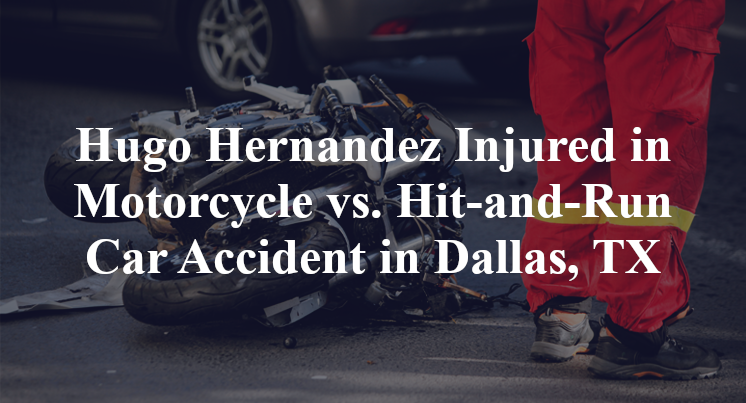
Officials indicate that, for reasons yet to be confirmed, the motorcycle was involved in a collision with another vehicle of unknown make or model. Hernandez reportedly sustained serious injuries as a result of the wreck.
The other vehicle allegedly fled the scene, the person(s) inside failing to stop and render aid of any sort to the victim. Additional details pertaining to this incident are not available at this point in time. The investigation is currently ongoing.
Commentary by Attorney Michael Grossman
Hit-and-run crashes involving motorcyclists are among the most difficult to investigate and the most devastating for the person left behind. In a case like the one involving Hugo Hernandez, the fact that the other vehicle fled the scene means that key facts are missing—and that makes it even more important to ask the right questions. From a legal standpoint, and more importantly from the standpoint of getting answers, there are three critical questions that always need to be addressed.
First, did the authorities thoroughly investigate the crash? In a hit-and-run, time is of the essence. Investigators should immediately canvass the area for surveillance footage, interview any potential witnesses, and secure physical evidence like paint transfer, tire marks, or broken vehicle parts that might help identify the fleeing vehicle. In a city as large and busy as Dallas, there’s often a good chance that nearby businesses or homes had cameras running, but only if someone moves quickly to locate and preserve those recordings. If law enforcement doesn’t have the resources to cover that ground, it may fall to a private investigator or a legal team to gather the evidence before it’s lost.
Second, has anyone looked into the possibility that a vehicle defect played a role? In most cases, we think about vehicle defects in terms of the fleeing driver’s vehicle, but it’s equally important to examine the motorcycle. If the bike had a mechanical failure—steering, brakes, or lighting—it could have contributed to the crash or limited Mr. Hernandez’s ability to react. Additionally, if the motorcycle’s systems didn’t function properly in the aftermath (such as the headlight failing), it might have made the rider more vulnerable or made it harder for witnesses to see what happened. But these kinds of details can only be uncovered through a detailed forensic inspection of the motorcycle, which must be preserved in its post-crash condition.
The third question is whether all available electronic data has been collected. While motorcycles don’t always include traditional event data recorders, many modern models, including those from Indian Motorcycle Co., do log performance metrics and may have GPS systems or app-connected data that can be reviewed. Investigators should also pursue phone GPS data, traffic or red-light camera footage, and surveillance video from nearby intersections or businesses to identify the suspect vehicle. In hit-and-run cases, digital evidence is often the only way to piece together what really happened—and who was responsible.
Answering these three questions is critical to making sure that no stone is left unturned in understanding the causes of a crash like this. Serious wrecks deserve serious investigation, not assumptions. Getting clear answers to these questions is crucial for those seeking to understand what happened and why—and it’s the least that can be done to help those affected find the clarity and closure they deserve.

 call us
  Email Us
  Text us