
Dewitt County, TX — December 17, 2024, Francisco Torres was injured following a two-truck accident at approximately 7:15 a.m. along S.H. 119.
According to authorities, 71-year-old Francisco Torres was traveling in a Peterbilt 18-wheeler with a trailer in tow on State Highway 119 in the vicinity of Czaja Bros Road intersection when the accident took place.
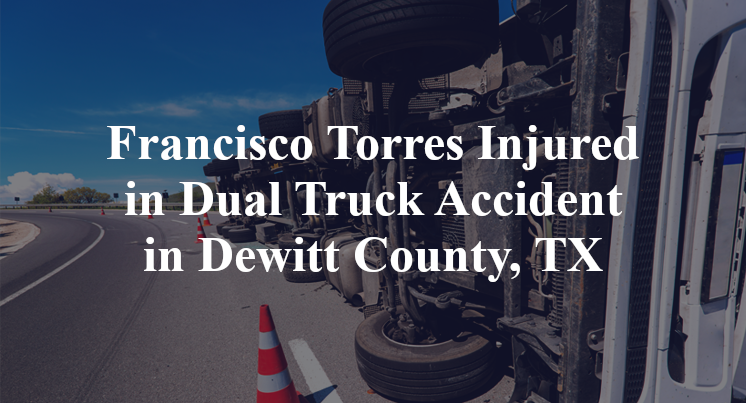
Officials indicate that, for as yet unknown reasons, a Kenworth 18-wheeler attempted a turn (presumably from a private drive onto the highway) at an unsafe time with apparently impaired visibility. This resulted in a collision between the left side of the Kenworth and the front-end of the Peterbilt.
Torres suffered reportedly serious injuries over the course of the accident, according to reports. He was transported to an area medical facility by EMS in order to receive necessary treatment. No other injuries have been reported. Additional details pertaining to this incident are not available at this point in time. The investigation is currently ongoing.
Commentary by Attorney Michael Grossman
When crashes like this one happen, the focus often lands on the immediate actions of the drivers involved—such as the Kenworth driver’s decision to attempt a turn despite impaired visibility. While such decisions are a critical part of the puzzle, my experience in handling commercial vehicle accident cases has taught me that the story often doesn’t end there. There are frequently deeper factors at play that require investigation to determine the full scope of what went wrong.
One major question in this case is why the Kenworth driver attempted a turn under apparently unsafe conditions. Was the driver relying on inadequate mirrors or other equipment to check for oncoming traffic? Did environmental factors, such as poor lighting or road obstructions, contribute to the decision? Or was the driver under time pressures or distracted in a way that hindered their judgment? Each of these possibilities warrants scrutiny, as they point to different potential contributors to the collision.
Additionally, the role of the Kenworth’s owner or operator—whether an individual or a trucking company—deserves thorough examination. Owners of commercial vehicles are responsible for ensuring their trucks are properly equipped and their drivers are trained to navigate challenging conditions. Were the Kenworth’s mirrors and visibility tools adequate for such a maneuver? Was the driver properly trained to assess whether the turn could be made safely? If shortcuts were taken with equipment or training, the responsibility may extend beyond the driver alone.
The state of both trucks also raises critical questions. For example, was the Kenworth’s turn signal functioning properly to alert the oncoming Peterbilt of its intentions? Similarly, were the brakes and steering systems on the Peterbilt fully operational to allow it to react appropriately? Equipment failure is often an overlooked factor in commercial accidents, and overlooking it here would leave a significant gap in understanding what led to this collision.
Ultimately, the goal is to uncover the truth and provide answers to those affected by the crash. Even if it requires conducting an independent investigation to obtain critical evidence, it’s essential to examine every factor to ensure those impacted by the incident receive the clarity and closure they deserve.

 call us
  Email Us
  Text us