
Update (July 10, 2025): Authorities have identified the driver killed in this accident as Elliot Cruz-Cobos, 29, of Beecher.
Sauk Village, IL — June 23, 2025, one person was killed in a truck accident at about 7:45 a.m. on State Route 394/Calumet Expressway.
Authorities said a car was heading south when it crashed into the back of a semi-truck near Steger Road.
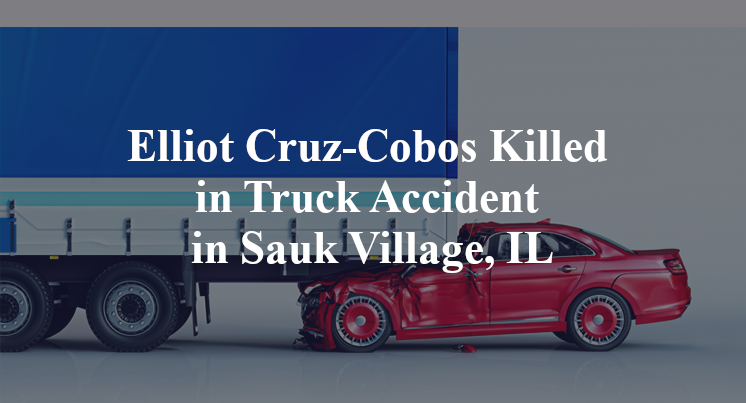
The driver of the car, whose name has not been made public yet, died at the scene of the crash, according to authorities.
No other injuries were reported.
Authorities have not released any additional information about the Cook County crash at this time. The accident is still being investigated.
Commentary by Attorney Michael Grossman
When someone dies in a crash with an 18-wheeler, people naturally want answers. How did this happen? Was the truck stopped or moving? Was the car driver at fault, or did the truck driver or their employer make a mistake? Right now, the details that would help answer those questions just aren’t available.
All we know is that a car crashed into the back of a semi-truck on State Route 394 in Sauk Village, and the car’s driver died. That’s a narrow picture of what actually happened, and until investigators fill in the gaps, it would be premature to draw conclusions about who’s responsible.
One major unanswered question is whether the truck was stopped or moving at the time of impact. If the truck had been pulled over on the shoulder — or worse, stopped in the travel lane — then that opens the door to serious questions about the driver’s decisions. I’ve worked on cases where trucks were stopped in live lanes with no warning lights or reflectors, and the results were often deadly. On the other hand, if the truck was moving and the car simply failed to maintain a safe following distance, then we’d be looking at a very different scenario.
Another issue is visibility and timing. Was the crash caused by reduced visibility, either from weather or poor truck lighting? Did the truck slow down suddenly? Did the driver of the car have enough time to react? These kinds of questions aren’t just academic; they get to the heart of who did what and why.
A proper investigation would look at several things: dash cam footage, engine control module (“black box”) data and cell phone records. In-cab cameras might show whether the truck driver was alert and driving responsibly. The truck’s black box could reveal its speed, braking patterns and whether its lights were on. All of this helps build a clear picture of what happened in the moments before impact.
But trucks don’t operate in a vacuum. The company that put the driver on the road also needs scrutiny. Did they properly train the driver? Are their safety policies adequate? I’ve handled cases where the trucker never should have been behind the wheel, and those failures often start at the top, with companies that cut corners in hiring, training or supervision.
Without more facts, it’s too early to say who’s to blame for this fatal crash. But someone needs to ask the right questions, and make sure they get real answers.
Key Takeaways:
- It’s unclear whether the semi-truck was stopped or moving at the time of the crash, a critical detail for determining fault.
- Evidence like dash cams, ECM data and phone records can shed light on what actually happened.
- If the truck was improperly stopped or poorly lit, that could point to truck driver or company negligence.
- Trucking company practices, including driver training and oversight, deserve scrutiny in fatal crashes.
- Getting the full story requires a thorough, evidence-based investigation.

 call us
  Email Us
  Text us