
Montgomery County, TX — August 31, 2024, Eduardo De La Cerda was injured in a motorcycle accident just before 11:15 p.m. along Interstate Highway 45.
According to authorities, 54-year-old Eduardo De La Cerda was traveling on a northbound Harley-Davidson motorcycle on the Interstate Highway 45 frontage road at the Raypine Drive intersection when the accident took place.
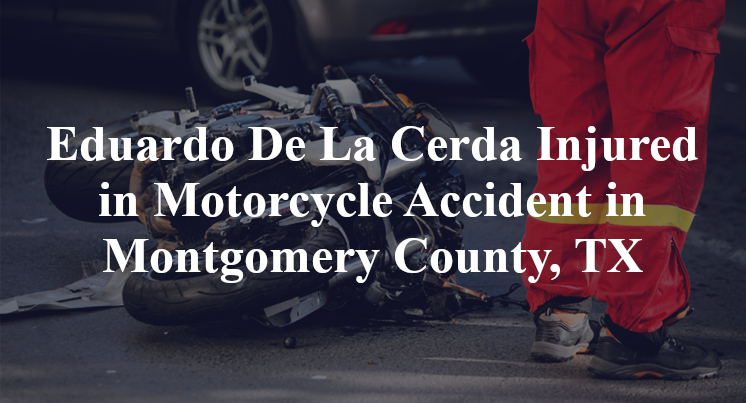
The cause of the accident remains unclear. Officials indicate that, for as yet unknown reasons, the Harley-Davidson failed to maintain control; it consequently ended up overturning. De La Cerda reportedly suffered serious injuries over the course of the accident. Additional details pertaining to this incident are not available at this point in time.
Commentary by Attorney Michael Grossman
When a motorcyclist is seriously injured in a single-vehicle crash and the cause remains unclear, especially late at night, people often assume the rider simply lost control. But in my experience, motorcycle crashes like this one near Raypine Drive often involve more than what’s immediately apparent. To fully understand what happened and whether the incident could have been prevented, there are three key questions that should be asked.
First, did the authorities conduct a thorough investigation? A crash occurring around 11:15 p.m. raises immediate concerns about lighting, visibility, and road conditions. Was the frontage road properly illuminated? Were there any hazards—potholes, debris, or slick surfaces—that could have caused the motorcycle to go down? Investigators should have examined the condition of the road surface and documented any evidence of braking or swerving. If these details weren’t carefully recorded, a second look from an independent investigator may be the only way to fill in the gaps.
Second, has anyone looked into whether a mechanical failure contributed to the crash? With motorcycles, even minor malfunctions can have serious consequences. A failure in the throttle, brakes, tires, or steering components could easily lead to a loss of control. These types of issues aren’t always visible and require a forensic inspection of the motorcycle to identify—an opportunity that’s lost if the vehicle is quickly repaired or scrapped.
Lastly, has any electronic or supplemental data been collected? While most motorcycles don’t come equipped with traditional event data recorders, some models may include electronic systems that capture limited performance data. Additionally, GPS data, cell phone records, or footage from nearby businesses might offer valuable insights into what happened in the moments before the crash. But, as with all crash-related data, time is critical, and this evidence needs to be secured early.
When someone suffers serious injuries in a crash and the cause remains unknown, it’s not enough to settle for easy assumptions. Asking these questions is the least that can be done to ensure that those affected by this crash get the clarity and closure they deserve.

 call us
  Email Us
  Text us