
Brookings County, SD — May 5, 2025, one person was killed and another was injured following a dump truck accident shortly after 4:45 p.m. along 487th Avenue.
According to authorities, a man was traveling in a southbound Chevrolet Tahoe on 487th Avenue in the vicinity north of Bushnell when the accident took place.
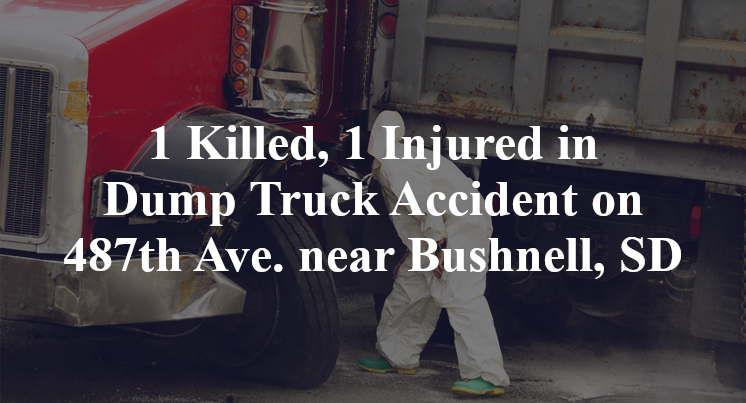
Details surrounding the accident remain scarce. Officials indicate that, for as yet unknown reasons, a collision took place between the southbound Tahoe and a northbound Freightliner dump truck.
The man who had been behind the wheel of the Tahoe reportedly suffered fatal injuries due to the wreck and was declared deceased at the scene. The person who had been behind the wheel of the dump truck suffered serious injuries, as well, according to reports.
Additional details pertaining to this incident—including the identities of the victims—are not available at this point in time. The investigation is currently ongoing.
Commentary by Attorney Michael Grossman
When a southbound SUV and a northbound dump truck collide head-on on a rural road, the natural question that follows is also the most important one legally: Which vehicle crossed the center line, and why? That detail alone can shift the entire understanding of the crash. But getting to that answer takes more than just a look at skid marks or vehicle positions. It requires a close look at the road, the drivers, and the conditions leading up to the moment of impact.
One possibility is that the Tahoe drifted into the oncoming lane, but we can’t rule out the opposite—that the dump truck strayed across the center or overcompensated on a curve. In cases like this, I’ve often seen assumptions made too early in the process, before things like vehicle data, witness accounts, or forensic mapping have been completed. That’s dangerous, not just for getting the facts straight, but for ensuring accountability lands where it belongs.
It’s also critical to consider the condition and operation of the dump truck. Was it fully loaded, making it harder to brake or steer? Did the driver have the training to handle a vehicle of that size on a two-lane rural road? Commercial vehicles like dump trucks are heavy, wide, and require more skill to manage safely—especially when navigating narrow lanes or uneven road surfaces. If the driver wasn’t properly prepared or the vehicle wasn’t in peak condition, that could have contributed to a loss of control.
And if the dump truck was being operated as part of a commercial business, the company behind it must also be looked at. Was the driver screened and trained before being hired? Did the company perform regular inspections on the vehicle? Was the driver under pressure to meet a deadline or complete a certain number of loads that day? I’ve seen companies push drivers too hard or cut corners on training and maintenance, only for the consequences to play out on the road. If the crash was influenced by those kinds of choices, then the responsibility doesn’t stop with the person behind the wheel—it extends to the people who put them there.
Getting to the bottom of a crash like this means asking the right questions and refusing to stop at surface-level explanations. Serious wrecks deserve serious investigation, not assumptions. Understanding which vehicle veered off course, why it happened, and whether proper training or oversight could have made a difference is key to figuring out what might have happened. Getting clear answers to these questions is the least that can be done to help those affected find the clarity and closure they deserve.

 call us
  Email Us
  Text us