
Guadalupe County, TX — May 29, 2025, Domingo Setien was injured as the result of a semi-truck accident at around 8:35 a.m. along I-10.
According to initial details about the accident, it happened a few miles east of Seguin near Kingsbury just off TX-130.
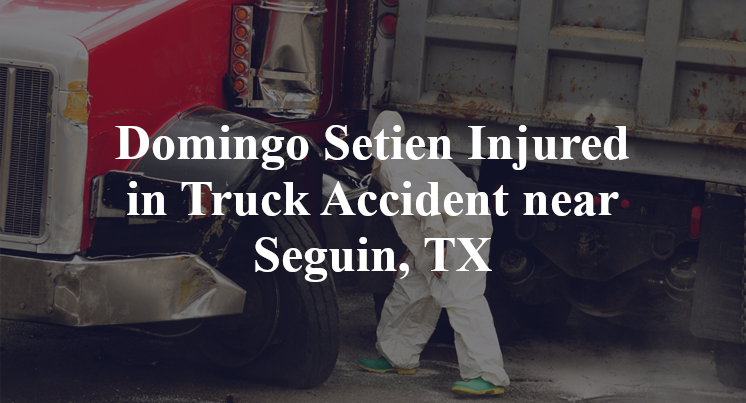
Investigators said that Domingo Setien was in a Ford Escort on westbound lanes of the interstate. Authorities say a tractor-trailer failed to control speed, resulting in a collision with Domingo Setien as well as a Dodge truck pulling a trailer.
As a result of the accident, reports say Domingo Setien was seriously injured. No other injuries were reported. Authorities recommended the semi-truck driver be cited for the crash.
Commentary by Attorney Michael Grossman
When a semi-truck fails to control its speed on the interstate and ends up hitting multiple vehicles, it raises serious questions—not just about what the driver was doing at that moment, but about the systems that put that driver on the road. Crashes like this often reflect a broader breakdown in oversight, where the trucking company’s decisions can be just as important as the driver’s actions.
Failing to control speed may sound like a momentary lapse, but it’s a red flag that deserves a closer look. Was the truck following too closely? Was the driver distracted or fatigued? Did the company build a delivery schedule that forced the driver to rush through traffic to stay on time? These are the questions that don’t show up in a citation—but they’re the ones that reveal how preventable the crash may have been.
In my experience, when a commercial vehicle rear-ends one or more cars, it’s rarely just a case of “bad driving.” Often, we find that the driver wasn’t properly trained properly, or they were operating under pressure to meet unrealistic delivery windows. Sometimes the truck itself was poorly maintained—with worn brakes, bad tires, or a heavy load that made it harder to stop safely. All of that traces back to the company responsible for the vehicle.
That’s why investigations into these types of crashes have to go beyond the roadside report. Authorities—and, when necessary, legal teams—should be looking at the truck’s engine control module (ECM) data, driver logs, and company safety policies. Only then can we see whether the crash was the result of a driver’s poor decision—or a system that encouraged or allowed it to happen.
Key Takeaways
- Speed-related crashes involving semi-trucks often point to systemic issues, not just driver error.
- Company practices around training, scheduling, and equipment maintenance must be examined.
- ECM data and driver logs are key to understanding whether the driver was rushed, fatigued, or improperly managed.
- A single citation doesn’t reflect the full scope of responsibility in commercial truck wrecks.
- Accountability should include the company’s role in creating conditions that lead to unsafe driving.

 call us
  Email Us
  Text us