
Warren County, OH — April 14, 2025, David Wills was killed and another person was injured in a truck accident at about 11:15 a.m. on State Route 741.
Authorities said a 2018 Kenworth semi-truck was headed north near Greentree Road when it overcorrected after driving off the right side of the road. It crashed head-on into a 2001 Ford F-150 that had been going south.
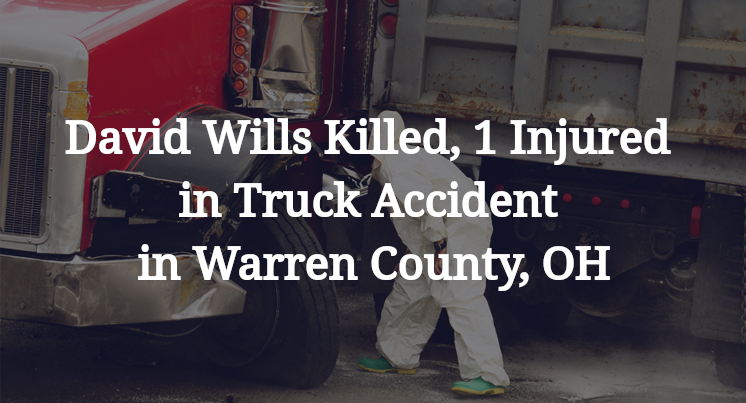
Ford driver David Wills, 69, of Franklin was pronounced dead at the scene of the crash in Turtlecreek Township, while the truck driver was hospitalized with non-life-threatening injuries, according to authorities.
Authorities have not released any additional information about the Warren County crash at this time. The accident is still under investigation.
Commentary by Attorney Michael Grossman
When a semi-truck veers off the side of a roadway and then overcorrects into oncoming traffic, resulting in a head-on collision, the legal questions come into sharp focus: What caused the truck to leave the road in the first place, and why was the correction so extreme that it led to a fatal crash? These aren’t just questions of driving technique. They’re questions of responsibility.
According to early reports, a northbound Kenworth semi-truck went off the right side of State Route 741 and then overcorrected, crossing into the path of a southbound Ford F-150. The resulting head-on collision killed the driver of the pickup. From a legal standpoint, this type of crash is almost always rooted in driver error, and in a commercial context, that raises additional concerns about training, fatigue and oversight.
Overcorrection typically happens when a driver panics or reacts abruptly to a lane departure. That’s dangerous enough in a passenger vehicle, but with a fully loaded commercial truck, sudden steering inputs can lead to disastrous results, especially on two-lane roads where oncoming traffic is only a few feet away. Professional drivers are trained specifically to avoid this kind of overreaction. The fact that it happened here suggests either a lapse in training, a moment of distraction or some external factor that caused the initial departure from the roadway.
Investigators should begin by reviewing the truck’s engine control module, which will provide key data on speed, braking and steering in the moments leading up to the crash. That data may help determine whether the truck driver was reacting to an obstacle, losing control due to excessive speed or simply drifting off the roadway. Cell phone records and logbook reviews will also be important in assessing whether distraction or fatigue played a role.
It’s also worth examining the roadway conditions at the time of the crash. Was there a soft shoulder or drop-off that made recovery difficult? Were there any environmental factors, like wind or uneven pavement, that could have influenced vehicle control? These questions don’t shift responsibility, but they do help clarify whether the loss of control was entirely driver-related or compounded by other issues.
Regardless of the specific cause, the underlying failure here appears to be in how the vehicle was managed after it left the roadway. Commercial drivers are expected to maintain control, even when things go wrong. The law holds them to a higher standard precisely because the margin for error is so small and the consequences so severe.
The investigation should focus not just on what the truck driver did wrong in that moment, but on what circumstances — training, scheduling or equipment — might have made that moment more likely to occur. Because a fatal head-on crash caused by an overcorrection doesn’t just represent a single bad decision. It often points to a larger breakdown in the safety systems that are supposed to prevent it.

 call us
  Email Us
  Text us