
Cle Elum, WA — April 22, 2025, Daryl Lee was injured following a truck accident at approximately 10:00 a.m. along Interstate Highway 90.
According to authorities, Daryl Lee was an occupant of a stationary attenuator truck that was assisting in blocking a closed lane at a construction zone in the eastbound lanes of I.H. 90 in the vicinity of Nelson Siding Road when the accident took place.
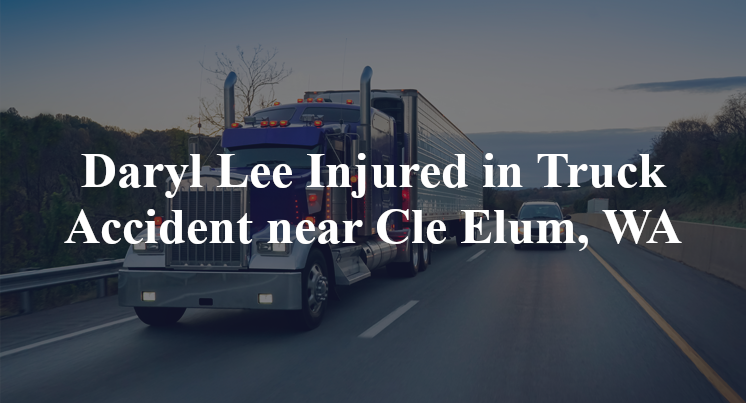
The cause of the accident remains unclear. Officials indicate that, for as yet unknown reasons, an eastbound 18-wheeler neglected to change lanes despite the closure. The 18-wheeler crashed into the attenuator truck as a result.
Lee reportedly sustained injuries of unknown severity due to the wreck. No other injuries have been reported. Additional details pertaining to this incident are not available at this point in time. The investigation is currently ongoing.
Commentary by Attorney Michael Grossman
In my experience, when a commercial truck strikes a stationary attenuator vehicle in a marked construction zone, the central issue is almost always a failure to heed basic safety expectations—expectations that every professional driver is trained to follow. These buffer trucks are specifically designed to protect work crews and signal drivers to slow down and change lanes. When an 18-wheeler crashes into one, it suggests either the driver wasn’t paying attention, wasn’t able to react in time, or both.
Early reports indicate the truck failed to move out of a closed lane. That’s a serious concern. In work zones, signage, flashing lights, and often even electronic message boards are used well in advance of the closure to give drivers time to adjust. If a truck continues straight through despite those warnings, we have to ask why. Was the driver distracted—possibly using a phone or other device? Were they fatigued or operating under time pressure? Did poor visibility or speed play a role? These are questions that don’t just apply to the crash—they speak to how preventable it may have been.
And if the truck was operating under a commercial carrier, the investigation needs to extend to that company’s policies and oversight. Was the driver properly trained to navigate construction zones? Did the company monitor for distracted driving or enforce realistic delivery schedules? Was the truck equipped with collision avoidance technology that either wasn’t functioning or wasn’t used? In many of the cases I’ve handled, it’s not just the driver who made a poor decision—it’s a system of incentives or lack of oversight that allowed unsafe behavior to continue unchecked.
Attenuator trucks are there for a reason: to prevent direct impacts on people doing dangerous work just feet from high-speed traffic. That this one was hit—and someone inside it injured—shows that even with multiple layers of protection, a failure to follow the rules can still lead to harm.
From where I sit, a collision like this demands more than just a citation for improper lane use. It requires a serious look into how a truck ended up in a closed lane, whether the driver had the tools and training to avoid it, and whether the company responsible did its part to prevent that truck from becoming a hazard. Only then can the right parties be held accountable and those affected by the wreck receive the clarity and closure they deserve.

 call us
  Email Us
  Text us