
Huntsville, TX — April 8, 2025, One person wa skilled following an 18-wheeler accident that occurred at around 1:22 A.M. on I-45.
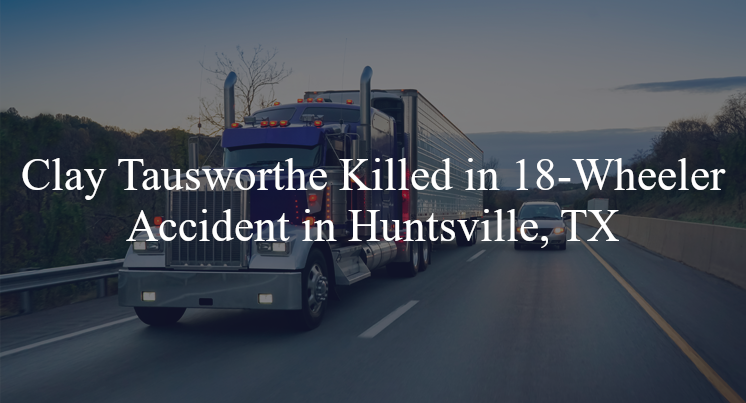
An investigation is underway following a car accident that left one person dead during the early-morning hours of April 8th. According to official reports, Clay Tausworthe was traveling in a Toyota Tundra on I-45 in the northbound lanes, when an 18-wheeler that had been stopped on the side of the road attempted to merge back on the highway but failed to reach highway speeds before the Tundra collided with its rear, causing the toyota to catch fire.
When first responders arrived on the scene, they found that Tausworthe had sustained fatal injuries and he was pronounced deceased. At this time there has been no further information released from the accident, however this remains an ongoing investigation and more details may be released by authorities in the future.
Commentary by Attorney Michael Grossman
When a semi-truck reenters a highway and fails to reach speed before a vehicle collides with its rear, the question isn’t just about who had the right of way—it’s whether the truck should have been merging at all under those conditions. Trucks don’t move like passenger vehicles, and when they attempt to reenter fast-moving traffic without fully matching speed, they can turn into obstacles that drivers have no real chance to avoid.
According to reports, the 18-wheeler had been stopped on the shoulder of I-45 before attempting to merge back onto the roadway. For reasons not yet clear, the truck didn’t accelerate fast enough, and the Toyota Tundra collided with its rear. That impact led to a fire that claimed the driver’s life. At first glance, it might seem like a simple case of failing to yield. But there’s more to examine—starting with why the truck was stopped in the first place and whether it reentered traffic safely.
Commercial drivers are trained to merge with extreme caution and only when there’s a safe opening. That means waiting for a long enough gap in traffic, using hazard signals, and accelerating in a way that avoids becoming a hazard themselves. If the truck pulled into traffic too early or too slowly, that could be a sign of negligence. Investigators should be reviewing the truck’s onboard data to determine how fast it was going when it reentered the highway, and whether the driver followed proper safety procedures.
There’s also the issue of visibility. In the early morning hours, low light conditions can make it harder for approaching drivers to recognize a slow-moving truck entering their lane—especially if reflectors or lights weren’t functioning properly. If the trailer wasn’t clearly visible, the Tundra driver may have had no chance to react in time.
And then there’s the fire. A post-collision fire that results in a fatality always raises the question of whether the vehicle’s design or condition contributed to the severity of the outcome. Investigators should look into whether the truck’s fuel system was vulnerable in a rear-end impact, and whether the Toyota had any structural issues that made the fire more likely or harder to escape.
In crashes like this, the focus often falls on speed or driver reaction time. But the deeper issue is whether the truck ever should have been in that lane in the first place, under those conditions. When a driver’s life is lost, we owe it to them to ask not just how the crash happened, but whether it could have been avoided altogether. That’s where accountability starts—and where real answers can be found.

 call us
  Email Us
  Text us