
Sioux Falls, SD — June 2, 2025, Casey Wilson was killed and another person was injured in a truck accident sometime in the morning along I.H. 90.
According to authorities, 50-year-old Casey Wilson was traveling in a westbound Dodge Grand Caravan on I.H. 90 approaching a construction area when the accident took place.
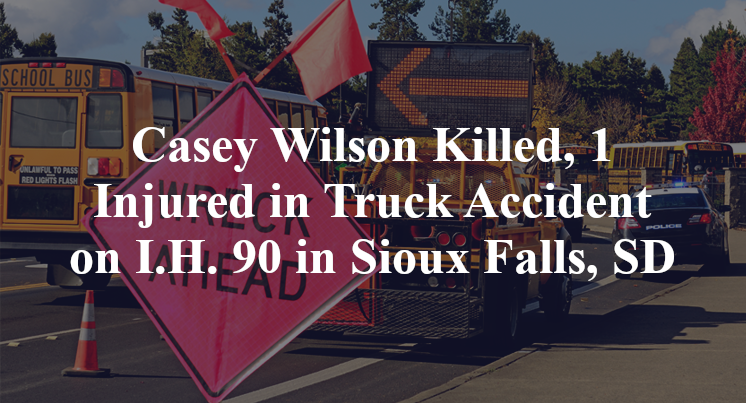
There was a parked Ford F-350 construction vehicle with its arrow and warning sign activated in order to direct traffic. Officials indicate that, for as yet unknown reasons, the Dodge rear-ended the back of the construction truck and apparently caught fire over the course of the accident.
Wilson reportedly suffered fatal injuries and was declared deceased at the scene. The man who had been in the Ford received minor injuries, as well, according to reports. Additional details pertaining to this incident are not available at this point in time. The investigation is currently ongoing.
Commentary by Attorney Michael Grossman
When a minivan slams into the back of a construction truck that’s parked with its warning signals activated, most people assume the driver must have simply not been paying attention. But from a legal standpoint, that’s far too simple an explanation. The real question is: Was the warning system set up in a way that gave approaching drivers a fair chance to react? That’s something only a detailed investigation can answer.
It’s not unusual for crashes in work zones to result from poor visibility, confusing signage, or abrupt lane shifts. Just because a vehicle has its arrow board on doesn’t mean it was positioned properly—or early enough—to alert traffic in time. I’ve seen cases where the warning truck was technically compliant with regulations, but still placed in a way that left drivers with little room or time to make a safe adjustment.
In this situation, the impact reportedly caused the van to catch fire, which suggests a high-speed collision—another reason to ask whether traffic control measures were designed to account for the speed limit and the behavior of westbound drivers on that stretch of I-90. Was there enough distance between the work zone signage and the hazard vehicle? Were there cones, advance warning signs, or crash cushions in place? These are the kinds of details that determine whether a warning setup was legally adequate—or dangerously insufficient.
It’s also important to consider whether visibility played a role. Was the sun in drivers’ eyes that morning? Were construction vehicles partially hidden by curves or overpasses? The trucking company or contractor responsible for the work zone setup may have met minimum legal standards, but that doesn’t always mean they exercised reasonable caution under the actual conditions.
Every fatal work zone crash raises a chain of accountability questions that don’t stop with the driver. Who managed the lane closures? Who positioned the equipment? Who signed off on the traffic control plan? If any of those pieces were poorly executed, the person who died may have been set up to fail—through no fault of their own.
Key Takeaways:
- Even with warning lights active, a construction vehicle’s position and visibility are critical to driver safety.
- Investigators must evaluate whether the work zone setup gave drivers enough time and space to respond safely.
- Advance warnings, buffer zones, and crash attenuation equipment all play a role in preventing rear-end collisions.
- Environmental factors like sun glare or road design may have contributed to limited visibility or reaction time.
- Responsibility may extend beyond the driver to those who planned, implemented, or approved the traffic control measures.

 call us
  Email Us
  Text us