
Tarrant County, TX — May 20, 2025, a man was injured in a single-vehicle truck accident shortly before 3:00 p.m. along State Highway 360.
According to authorities, a 32-year-old man from Carrollton was traveling in a northwest bound Freightliner 18-wheeler on S.H. 360 in the vicinity S.H. 183 when the accident took place.
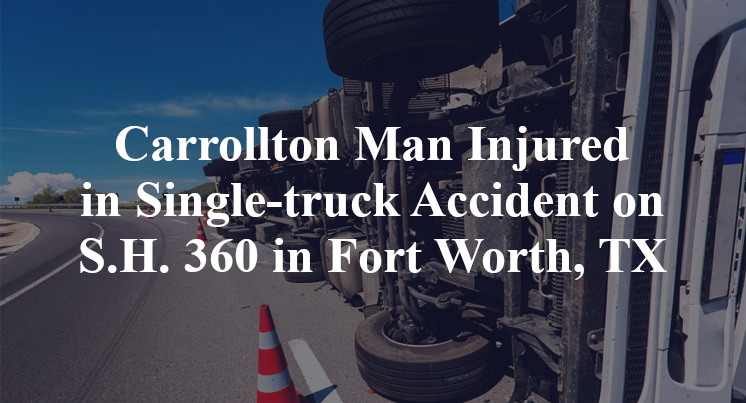
Officials indicate that, for reasons yet to be confirmed, the Freightliner was involved in a single-vehicle collision in which it overturned onto its left side. Authorities have noted that an improperly secured load may have contributed to the accident.
The man reportedly suffered serious injuries over the course of the accident. Additional details pertaining to this incident—including the identity of the victim—are not available at this point in time. The investigation is currently ongoing.
Commentary by Attorney Michael Grossman
When an 18-wheeler tips over on a major highway, people often assume the driver made some kind of mistake. But when investigators suggest that an improperly secured load may have played a role, the focus shifts. Suddenly, it’s not just about the driver—it’s about who loaded the truck, how it was secured, and whether anyone double-checked that the load was road-ready.
In cases like this, the key legal question is: Was the cargo secured according to industry standards, and if not, who’s responsible? It’s not uncommon for the loading process to involve multiple parties—warehouse staff, third-party logistics providers, or even the trucking company itself. And unless the trucker is personally involved in securing the freight, it’s entirely possible they’re relying on others to do the job correctly. When that trust is misplaced, the consequences can be devastating.
I’ve handled cargo-related cases where the root cause of the crash was buried two or three steps before the truck ever left the yard. In one, a piece of equipment shifted mid-turn because a strap failed—not because it broke, but because it was never tensioned in the first place. The driver had no way of knowing until the load shifted and the truck rolled.
That’s why the investigation here needs to look well beyond the scene of the wreck. Who selected the load configuration? Were photos taken during the loading process? What kind of training did the loading personnel have? Were any required inspections skipped or rushed? These are the questions that expose whether this was truly an accident—or a failure of planning, communication, and oversight.
It’s also important to consider whether the trucking company had clear protocols for verifying securement before hitting the road. In some operations, drivers are expected to visually inspect loads before departure, even when they didn’t do the loading themselves. But if the freight was sealed, or if time pressure prevented a proper walkaround, that puts the responsibility squarely on whoever was in charge of preparation.
When a truck rolls over due to shifting cargo, it’s not just the driver’s safety at risk—it’s everyone else on the road. These aren’t just technical errors; they’re legal liabilities with real human consequences.
Key Takeaways:
- Cargo securement is a shared responsibility, and failures may involve loaders, supervisors, or third-party logistics providers.
- The investigation should examine load configuration, securement methods, and inspection protocols used before the trip.
- Truck drivers often depend on others to secure freight properly—especially when trailers are sealed before pickup.
- Company policies and time pressures can influence whether safety checks are completed or skipped.
- A rollover caused by shifting cargo points to deeper procedural failures that extend well beyond the crash scene.

 call us
  Email Us
  Text us