
Kilgore, TX — April 4, 2025, Carlos Resendiz was injured due to a single-vehicle truck accident shortly before 2:30 a.m. along State Highway 42.
According to authorities, 42-year-old Carlos Lopez Resendiz was traveling in a northbound Freightliner Cascadia truck with a trailer in tow on S.H. 42 in the vicinity north of Interstate Highway 20 when the accident took place.
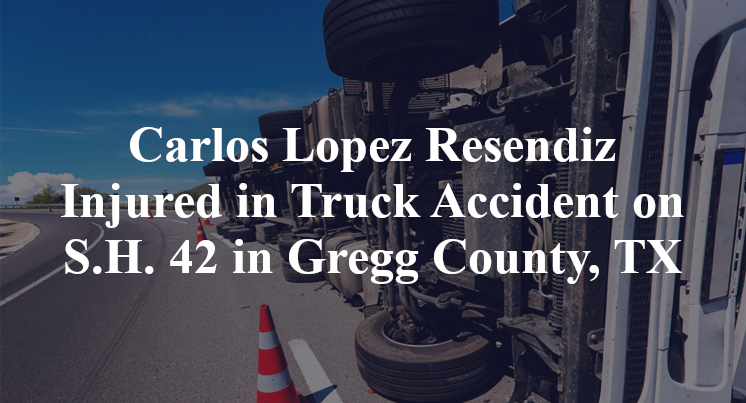
Officials indicate that, for reasons yet to be confirmed, the truck failed to safely maintain its lane of travel. It was consequently involved in a single-vehicle collision in which it apparently struck a guardrail. Resendiz reportedly sustained serious injuries over the course of the accident. Additional details pertaining to this incident are not available at this point in time. The investigation is currently ongoing.
Commentary by Attorney Michael Grossman
When a commercial truck veers out of its lane and crashes—especially in the early morning hours—the public is right to ask whether the driver was alert, the vehicle was roadworthy, or if some combination of both failed at a critical moment. A single-vehicle crash involving a guardrail may seem simple on the surface, but experience shows these incidents often point to deeper systemic issues.
The first area of concern is driver condition. At 2:30 a.m., fatigue is a common factor. Trucking companies are required to monitor hours-of-service to prevent drowsy driving, but that only matters if the rules are followed—and enforced. Investigators will need to examine the driver’s logbooks, electronic logging device (ELD) records, and any in-cab video to see whether fatigue, distraction, or impairment played a role.
Another question is whether mechanical failure contributed to the crash. Was there a tire blowout? Steering issue? Brake failure? These possibilities often get overlooked unless someone steps in early to preserve the truck for a forensic inspection. In past cases I’ve worked, we’ve found that poorly maintained vehicles—trucks that should never have been on the road—were quietly pushed out the gate by companies more focused on delivery schedules than safety.
It’s also important to consider the role of cargo. If the trailer was improperly loaded or unbalanced, that could have affected vehicle handling and made it harder to maintain lane control. In one case from my docket, we uncovered that an overhanging steel load on a flatbed created a hazard no one had accounted for until it was too late.
Key Takeaways:
- Early-morning crashes often raise concerns about driver fatigue, distraction, or impairment.
- Truck logs, ELD data, and in-cab video can help confirm whether hours-of-service limits were followed.
- Mechanical issues and improper loading should be examined to rule out equipment-related causes.
- Past cases show that poor maintenance or cargo handling can turn a preventable swerve into a serious injury crash.
- A proper investigation must consider the full chain of decisions that put the truck on the road in the first place.

 call us
  Email Us
  Text us