
Brownsville, TX — April 5, 2025, One person was killed following a car accident that occurred at around 5:02 A.M. on FM 1419.
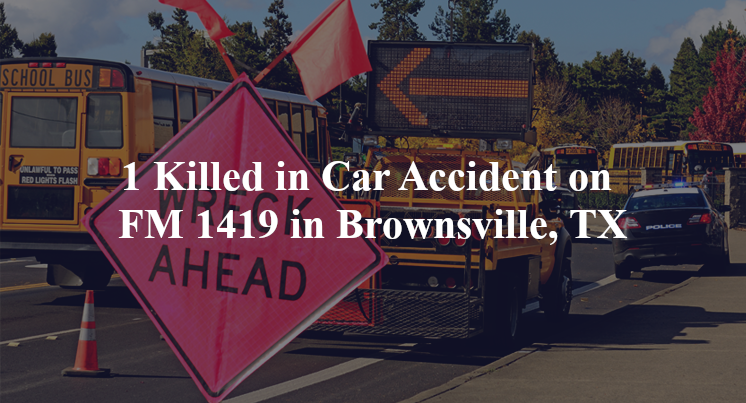
An investigation is underway following a car accident that left one person dead during the morning hours of April 5th. According to official reports, a Ford Focus was traveling on FM 1419 in the northbound lanes near Alaska Road, when for unknown reasons the vehicle lost control and left the roadway and struck a tree.
When first responders arrived on the scene, they found that the driver had sustained fatal injuries and he was pronounced deceased. At this time there has been no further information released about the accident, including the identity of the driver or what caused the vehicle to lose control, however this remains an ongoing investigation and more details may be released in the future.
Commentary by Attorney Michael Grossman
When I read that a driver lost their life after their vehicle veered off the road and struck a tree, like what occurred on FM 1419 near Alaska Road, I’m reminded that what appears to be a simple single-vehicle crash often leaves more questions than answers. It’s easy to assume that the driver simply lost control, but based on my experience, that assumption can overlook deeper, critical factors. To truly understand what happened, we must begin by asking three key questions that should guide every serious crash investigation.
First, did the authorities conduct a thorough investigation? In crashes where the vehicle leaves the roadway and no other vehicles are involved, there’s a tendency to treat the case as straightforward. But a meaningful investigation should still involve examining the condition of the road, looking at potential obstructions or hazards, and assessing whether anything unusual was occurring in the vehicle’s path. The curve of the road, the weather at the time, and the presence of skid marks or debris all play a role in reconstructing what happened. These investigations also depend heavily on the training and resources available to the agency responding to the scene, which can vary significantly.
Second, has anyone looked into the possibility that a vehicle defect contributed to the crash? Sudden loss of control—especially when no outside factor is immediately apparent—should prompt questions about whether something within the vehicle malfunctioned. This could include brake failure, issues with the suspension or steering, or even an electronic stability control system that didn’t respond as it should have. It’s also possible that a tire defect or blowout occurred. Unfortunately, unless the vehicle is preserved and thoroughly inspected, it’s very difficult to identify or rule out these possibilities. Once the vehicle is released, repaired, or destroyed, that opportunity is gone.
Third, has all electronic data related to the crash been collected? Modern vehicles like the Ford Focus are equipped with an engine control module (ECM), commonly referred to as a “black box.” This device can store critical data such as speed, steering input, braking, and throttle position in the moments leading up to the crash. That information is often the most reliable way to understand what was happening with the vehicle before it left the road. Additionally, any available dashcam footage or nearby surveillance cameras could help fill in gaps in the timeline. But all of this data is time-sensitive and must be preserved quickly to ensure it’s not lost.
A fatal crash like this one raises questions that deserve clear, evidence-based answers. The driver’s family—and the broader community—needs to understand not just that a crash occurred, but what truly caused it. Only by thoroughly exploring the quality of the investigation, the possibility of mechanical failure, and the available electronic evidence can we begin to build that understanding.

 call us
  Email Us
  Text us