
Midland County, TX — February 10, 2025, Brock Davidson was killed and Homar Hernandez was injured in a car accident at about 6:15 a.m. at South County Road 1110 and County Road 173.
Authorities said a 2025 Chevrolet Silverado, which was headed south on SCR 1110, collided with a 2016 Ford F-350 that was going east on CR 173.
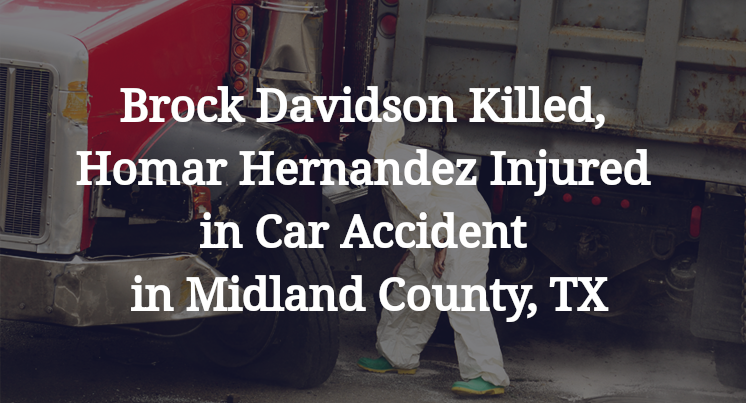
Chevrolet driver Brock D. Davidson, 55, died after being transported to a local hospital, according to authorities.
Ford driver Homar Hernandez, 48, suffered serious injuries in the crash south of Midland, authorities said.
Authorities have not released any additional information about the crash at this time. The accident remains under investigation.
Commentary by Attorney Michael Grossman
Crashes like the one in Midland County raise serious questions, and those affected deserve a full understanding of what happened. When two vehicles collide at an intersection, people often assume it comes down to a simple failure to yield. But in my experience, intersection crashes can be far more complex, and important details are sometimes overlooked. That’s why it’s crucial to ask three key questions to ensure a complete and thorough investigation.
The first question is whether the authorities conducted a proper investigation. Intersection collisions can be influenced by many factors: malfunctioning traffic signals, obstructed sightlines and even poor road conditions. Did investigators evaluate whether either driver had limited visibility or if road design played a role? Were weather conditions or pavement quality considered? Without a careful accident reconstruction, it’s possible that some of these critical elements could be missed.
The second question is whether a vehicle defect may have contributed. The Chevrolet Silverado involved in this crash was a 2025 model, meaning it was nearly brand-new. While that suggests reliability, new vehicles are not immune to mechanical or electronic failures. Braking malfunctions, steering defects or faulty driver-assistance systems could have played a role. Meanwhile, the Ford F-350 was nearly a decade old, which raises different concerns, such as worn braking systems or suspension issues. If either vehicle experienced a failure before the crash, that information could change the entire understanding of what happened. Unfortunately, if the vehicles are repaired or scrapped before an expert examination, potential evidence of a defect may be lost.
The third question is whether all electronic data related to the crash has been collected. Both trucks likely contain engine control modules that store key information such as speed, braking activity and steering input leading up to the crash. This data could reveal whether either driver attempted to stop or if there was a sudden loss of control. Additionally, traffic cameras, surveillance footage and even dashcams from other drivers could provide critical context. If authorities haven’t gathered this information, an independent investigation may still be able to recover it.
No one should be left with unanswered questions after a serious crash. While it’s easy to assume an intersection collision is a simple matter of right-of-way, the reality is often more complicated. Without answering these three key questions, it’s impossible to know for certain what led to the crash. The best way to honor those affected is to make sure every possible factor has been considered and that no critical evidence has been overlooked.

 call us
  Email Us
  Text us