
Smith County, TX — October 23, 2024, Arthur and Kim Hill were killed following a motorcycle versus car accident at approximately 12:45 p.m. along F.M. 756.
According to authorities, 70-year-old Arthur Hill and 63-year-old Kim Hill were traveling on a northbound Kawasaki motorcycle on F.M. 756 in the vicinity south of County Road 129 when the accident took place.
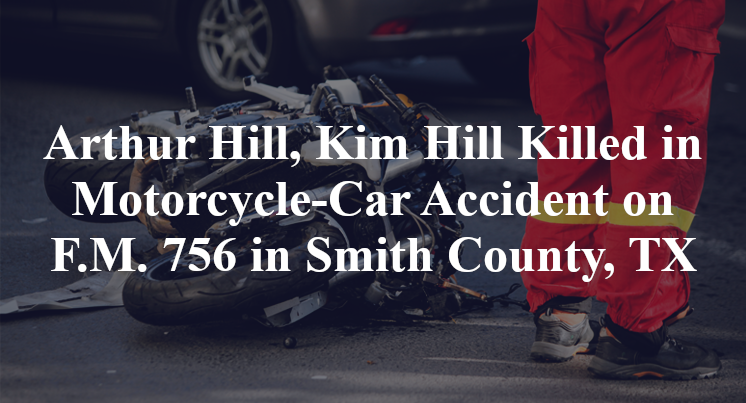
Officials indicate that, for reasons yet to be confirmed, a southbound Ford Fusion attempted a left turn from F.M. 756 onto a private drive at an apparently unsafe time, failing to yield the right-of-way to northbound traffic. This resulted in a collision between the right side of the Ford and the front-end of the Kawasaki.
Both Arthur Hill and Kim Hill suffered fatal injuries over the course of the accident. No other injuries have been reported. Additional details pertaining to this incident are not available at this point in time. The investigation is currently ongoing.
Commentary by Attorney Michael Grossman
When accidents like this occur, especially those involving fatalities, it is essential to conduct a thorough investigation to determine how and why the crash happened. Early reports suggest that a vehicle failed to yield the right-of-way while turning, leading to a collision with an oncoming motorcycle, but many critical details remain unclear. To uncover the full story, three key questions must guide the inquiry.
First, did the authorities thoroughly investigate the crash? Collisions involving turning vehicles and motorcycles require meticulous analysis of the scene to reconstruct the sequence of events. Investigators should examine physical evidence such as tire marks, vehicle damage, and the final positions of both the motorcycle and the car. Witness statements and any available surveillance or dashcam footage could provide crucial insights into the actions of both the driver of the Ford Fusion and the motorcyclists leading up to the collision. Understanding the timing of the turn and whether the driver could have reasonably seen the approaching motorcycle is critical.
Second, has anyone considered whether a vehicle defect might have contributed to the crash? Mechanical issues, such as brake or steering malfunctions, can impair a driver’s ability to stop or turn safely, potentially leading to an unsafe maneuver. Similarly, the motorcycle should be examined for any mechanical failures, such as brake or throttle issues, that could have affected its ability to avoid the collision. A forensic examination of both vehicles is necessary to identify or rule out any mechanical problems that could have contributed to the incident.
Finally, has all relevant electronic data been collected? Both the Ford Fusion and the Kawasaki motorcycle may be equipped with event data recorders (EDRs) that can provide key information about speed, braking, and steering inputs leading up to the crash. This data can help determine whether the driver of the Ford attempted to brake or whether the motorcycle’s movements were consistent with driver input. Additionally, any available surveillance footage or nearby dashcams could provide visual evidence of the moments before and during the collision. Promptly securing this data is vital to preserve important insights.
Motorcycle accidents involving left-turning vehicles are unfortunately common, but they are rarely straightforward. A thorough investigation is essential to identify all contributing factors, ensuring that no detail is overlooked. By focusing on the quality of the inquiry, exploring potential mechanical issues, and collecting all available electronic data, investigators can work toward providing a clear understanding of what happened. For the loved ones of Arthur and Kim Hill, obtaining these answers is a necessary step toward closure and accountability. A comprehensive investigation is the least that can be done to ensure every possible factor is carefully examined.

 call us
  Email Us
  Text us