
Harris County, TX — February 9, 2025, Andrew Hallard Jr. was injured in a motorcycle versus car accident at approximately 11:30 p.m. along Katy Fort Bend Road.
According to authorities, 28-year-old Andrew Hallard Jr. was traveling on a northbound Honda motorcycle on Katy Fort Bend Road at the Morton Road intersection when the accident took place.
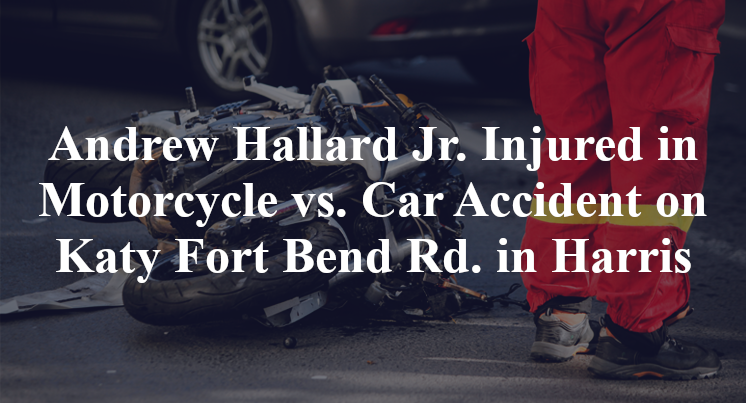
Officials indicate that, for as yet unknown reasons, a westbound Ford F-150 pickup truck on Morton Road entered the intersection at an apparently unsafe time, failing to heed the signal indicated by the traffic light. This resulted in a collision between the motorcycle and the pickup truck. Hallard reportedly suffered serious injuries as a result of the wreck. Additional details pertaining to this incident are not available at this point in time. The investigation is currently ongoing.
Commentary by Attorney Michael Grossman
When crashes like this happen—particularly those involving motorcycles and intersections controlled by traffic signals—it’s easy to point to one party’s failure to yield and move on. But in my experience, especially when a motorcyclist is seriously injured, it’s critical to dig deeper into what might have caused the vehicle to enter the intersection at the wrong time. To understand the circumstances surrounding this crash at Katy Fort Bend and Morton Roads, three essential questions need to be asked.
First, did investigators thoroughly assess the traffic signal system and visibility at the intersection? Was the light functioning properly at the time of the crash? Intersections can become dangerous when signals are mistimed, difficult to see, or if multiple lights cause confusion. Investigators should verify whether the signal was clear and unambiguous to all road users and whether visibility conditions—such as glare, weather, or obstructed signage—might have played a role.
Second, has anyone considered whether a mechanical issue in the Ford F-150 may have caused the driver to enter the intersection unexpectedly? Brake failure, throttle malfunction, or issues with the transmission can all contribute to a vehicle continuing forward when the driver intends to stop. These kinds of failures aren’t always visually obvious and require a detailed forensic inspection of the vehicle in its post-crash condition.
Finally, has all electronic and digital evidence been preserved and reviewed? Both the motorcycle and the pickup may carry valuable data—particularly the pickup, which likely contains an event data recorder that can show speed, throttle position, braking, and steering input just before the crash. Investigators should also look into dashcam footage, GPS data, and any nearby surveillance video that may have captured the incident from other angles. These tools can help reconstruct not just the collision itself, but the critical seconds leading up to it.
Answering these three questions is critical to making sure that no stone is left unturned in understanding the causes of a crash like this. Serious wrecks deserve serious investigation, not assumptions. Getting clear answers to these questions is crucial for those seeking to understand what happened and why—and it’s the least that can be done to help those affected find the clarity and closure they deserve.

 call us
  Email Us
  Text us