
Collin County, TX — July 23, 2025, Andrew Frank was injured due to a motorcycle accident just after 1:30 a.m. along State Highway 5 (North McDonald Street).
According to authorities, 23-year-old Andrew Frank was traveling on a northeast bound Kawasaki motorcycle on S.H. 5 in the vicinity of the Fannin Road intersection when the accident took place.
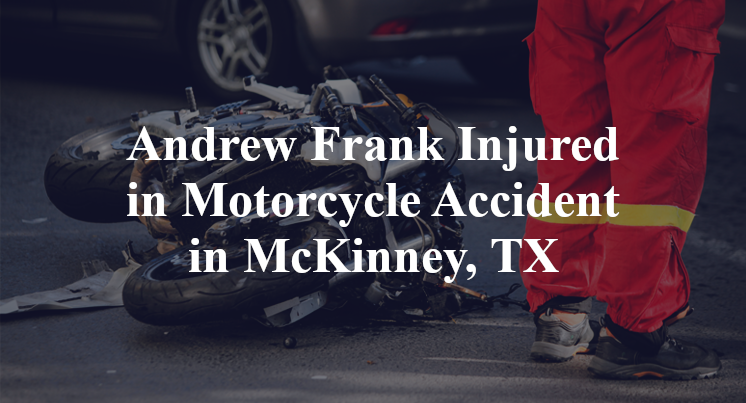
Officials indicate that, for reasons yet to be confirmed, the motorcycle was involved in a single-vehicle collision in which it apparently struck a fixed object. Frank reportedly sustained serious injuries over the course of the accident. Additional details pertaining to this incident are not available at this point in time. The investigation is currently ongoing.
Commentary by Attorney Michael Grossman
Late-night crashes often leave more questions than answers, and that’s especially true when only one vehicle is involved. A motorcycle wreck like this demands careful scrutiny—because without it, the true cause may never come into focus.
Did the authorities thoroughly investigate the crash?
With a single-vehicle motorcycle accident, there’s a tendency to assume the rider simply “lost control.” But motorcycles are uniquely sensitive machines, and investigating their crashes requires more than a quick look at skid marks or damage. Did investigators reconstruct the bike’s path? Did they account for rider behavior in the moments before the crash? Some crash teams have that training, but many don’t. Without detailed analysis, it’s too easy to stop short of the full picture.
Has anyone looked into the possibility that a vehicle defect caused the crash?
A motorcycle doesn’t need a big failure for something to go terribly wrong—a brake imbalance, a locked wheel sensor, or a steering issue could all cause a rider to suddenly lose control. Tire blowouts are another common culprit. Unless the Kawasaki was inspected thoroughly after the wreck, it’s impossible to rule out whether a defect or sudden failure played a role in the collision.
Has all the electronic data relating to the crash been collected?
While motorcycles don’t log as much data as passenger cars, some models do have onboard systems that record limited performance data. Even without that, GPS records, phone activity, or nearby traffic cameras can provide context about the rider’s actions just before impact. If none of those sources were reviewed, the investigation risks being incomplete.
Understanding a crash isn’t about quick conclusions—it’s about asking the questions that reveal what really happened. For motorcycle wrecks, where the margin for error is so small, that diligence is even more important.
Key Takeaways:
- Motorcycle crashes often need more than basic scene review to be understood.
- Mechanical issues like brake or tire failures may have contributed.
- Data from electronics, phones, or cameras can shed light on what happened.

 call us
  Email Us
  Text us