
Hidalgo County, TX — June 29, 2024, Anastacio Martinez Jr. was killed due to a truck accident at approximately 9:00 a.m. along Interstate Highway 2.
According to authorities, 52-year-old Anastacio Martinez Jr. was traveling in an eastbound Freightliner 18-wheeler with a trailer in tow on I-2 in the vicinity west of Paloma Street when the accident took place.
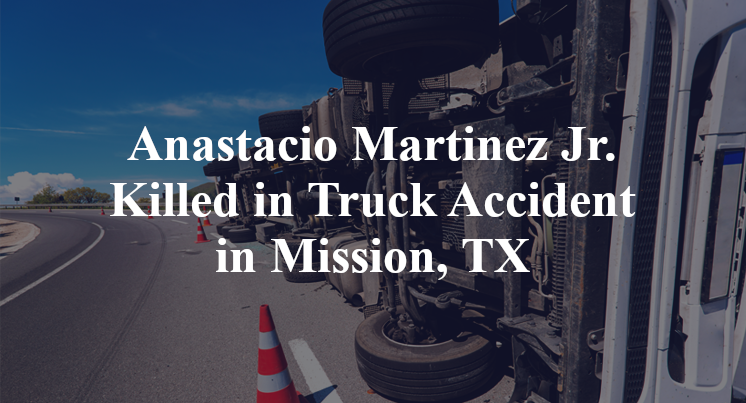
Officials indicate that, for as yet unknown reasons, an eastbound Fiat SUV made a lane change at an apparently unsafe time. A collision consequently occurred between the left side of the Fiat and the front-right quarter of the Freightliner. The impact caused the truck to swerve to the right, veering over the right two eastbound lanes, a median, and the eastbound service road lanes before leaving the roadway completely. It came to a stop only after crashing through a cinderblock wall and a vacant residential building. Martinez reportedly sustained fatal injuries over the course of the accident. Additional details pertaining to this incident are not available at this point in time.
Commentary by Attorney Michael Grossman
When a fully loaded 18-wheeler leaves the highway, crosses multiple lanes, and crashes through a wall into a building, it’s easy to overlook what triggered the whole chain of events. But here, the initial contact came from a much smaller vehicle reportedly making an unsafe lane change. That one decision set off a sequence that ended with a truck driver losing his life—and that raises serious questions about how such a maneuver was allowed to escalate so far.
Lane changes may seem like routine driving behavior, but at highway speeds—especially next to a vehicle that weighs 20 to 30 times more than a car—they carry real consequences. If the Fiat did, in fact, move into the truck’s lane without enough clearance, then the question becomes: Why? Was the driver unaware of the truck? Distracted? Misjudging the truck’s speed or distance? These are the kinds of decisions that can’t be fully understood without a thorough investigation.
That investigation should begin with dash cam footage, if available, along with any nearby surveillance cameras or witness accounts. Investigators also need to examine black box data from the truck to determine its speed, braking, and steering inputs at the time of the crash. That data can show whether the truck driver took evasive action and how quickly the truck began to lose control.
Just as important, though, is the question of space and reaction time. Tractor-trailers require a much longer distance to stop or swerve than smaller vehicles. A sudden cut-in by a car at highway speed can leave the truck driver with no safe option, especially if other vehicles are occupying the surrounding lanes. Depending on traffic conditions, swerving may have been the only choice—and unfortunately, in this case, a fatal one.
Key Takeaways:
- A reported unsafe lane change by a smaller vehicle may have triggered the crash, but full context is needed to confirm fault.
- Dash cam footage and black box data are critical to reconstructing what the truck driver saw and how he responded.
- Tractor-trailers can’t react as quickly as smaller cars, making sudden lane changes near them extremely dangerous.
- Even small decisions in highway traffic can carry life-and-death consequences when large trucks are involved.

 call us
  Email Us
  Text us