
Update (July 17, 2025): Authorities have identified the driver who was killed in this accident as Ahmed Bourg, 57, of Windmere, FL. The crash is still being investigated.
Cassia County, ID — July 13, 2025, one person was killed and another one was injured in a truck accident at about 6:50 a.m. on Interstate 84.
Authorities said a 2026 Freightliner semi-truck was heading west near Malta when its driver overcorrected after the truck left the road. The truck overturned, blocking both westbound lanes.
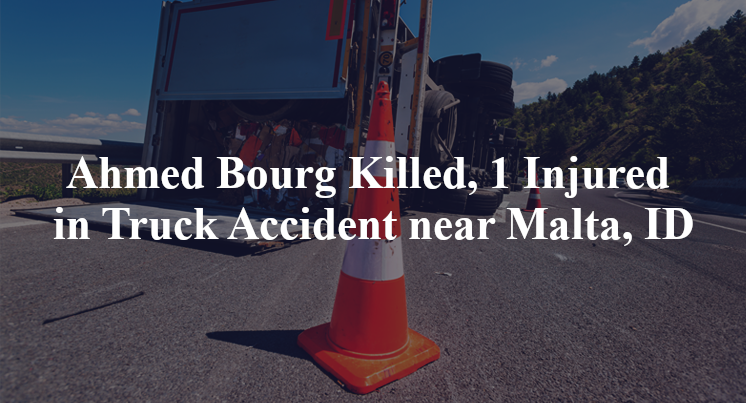
The driver, a 57-year-old Windmere, FL man whose name has not been made public yet, was pronounced dead at the scene of the crash, according to authorities.
A passenger in the truck, a 40-year-old man from Kissimmee, FL, was hospitalized with unspecified injuries, according to authorities.
Authorities have not released any additional information about the Cassia County crash at this time. The accident is still being investigated.
Commentary by Attorney Michael Grossman
When people hear about a semi-truck overturning on the highway, blocking both lanes and leaving one person dead and another injured, their first thought is often: What went wrong here? Was this just a tragic mistake, or could it have been prevented?
In this crash near Malta, authorities say the truck veered off the road and the driver overcorrected, causing the 18-wheeler to overturn. That might sound like an open-and-shut case, but it actually raises more questions than it answers. Specifically: Why did the truck leave the roadway in the first place?
It’s not clear from current reports whether the truck was forced off the road by another vehicle, whether the driver was distracted or fatigued or whether some mechanical failure was involved. Depending on what led to that initial loss of control, very different legal and factual issues come into play.
That’s why it’s essential to gather and examine objective evidence. Did the truck have an engine control module (ECM), often called the “black box,” that recorded speed, braking and steering inputs? Were there in-cab cameras that captured the driver’s behavior? Was the driver using a cell phone, and do call records support that? These aren’t hypotheticals; they’re the exact types of questions I ask when investigating a crash like this one.
Also worth examining: What role did the trucking company play in all this? Was the driver properly trained and rested? Was the company following safe hiring and supervision practices? I’ve handled cases where a driver never should’ve been on the road, because the company turned a blind eye to red flags in their driving history. And when that happens, it’s not just about individual accountability. It’s about company policies that allow unsafe drivers behind the wheel of 80,000-pound vehicles.
Until investigators look at the truck’s onboard data, the driver’s background and the company’s practices, we won’t have a full picture of what led to this fatal crash. But based on my experience, it’s a mistake to assume that the crash just “happened.” Every crash leaves a trail of evidence, and that’s what helps separate avoidable error from unavoidable circumstance.
Key Takeaways:
- The truck reportedly left the road and overturned after the driver overcorrected, but why it left the road remains unknown.
- Critical evidence — like ECM data, dashcam footage, and phone records — can help reconstruct the driver’s actions leading up to the crash.
- Investigators should also look into the trucking company’s training, supervision and hiring practices.
- Without that evidence, it’s impossible to know whether this was a random event or the result of avoidable mistakes.
- Getting to the truth means asking hard questions and letting the facts lead the way.

 call us
  Email Us
  Text us