
Walker County, TX — April 3, 2025, Two people were injured following an 18-wheeler accident that occurred at around 11:55 A.M. on I-45.
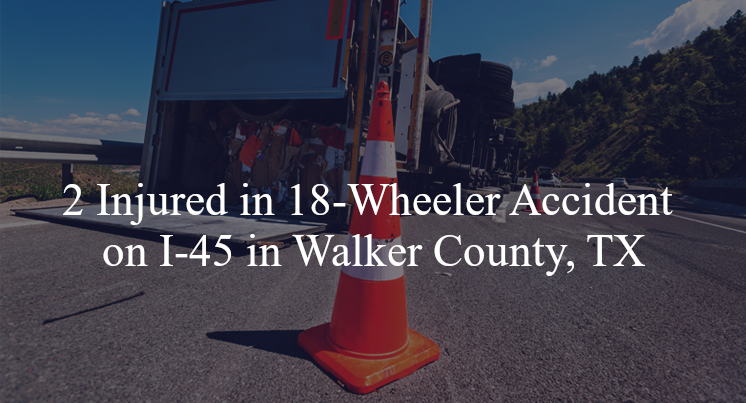
An investigation is underway following an 18-wheeler accident that left two people injured during the late-morning hours of April 3rd. According to official reports, an 18-wheeler hauling steel beams was traveling on I-45 in the southbound lanes near FM 2899, when for unknown reasons the truck lost control and struck a sign before crossing all southbound lanes before striking a cable barrier. The truck then overcorrected and tipped over, displacing the steel beams across the highway. A separate 18-wheeler then attempted to avoid the slowed traffic and also went through the cable barrier where it then crossed into the northbound lanes and struck a pickup truck.
When first responders arrived on the scene, they found that the driver of the first semi had sustained critical injuries, along with the driver of the pickup truck, and they were transported to the hospital for treatment, with the pickup driver being transported via helicopter. At this time there has been no further information released from the accident, including the identities and status of those injured, however this remains an ongoing investigation and more details may be released by authorities in the future.
Commentary by Attorney Michael Grossman
When a loaded 18-wheeler loses control, sheds its cargo, and sets off a chain reaction that spans both sides of a major interstate, it’s no longer just a matter of driver error—it’s a breakdown that likely began well before the first tire left the lane. Crashes like this one on I-45 are exactly why commercial trucking is held to such high safety standards. The potential for harm is simply too great when something goes wrong.
The reports say the first semi was hauling steel beams when it lost control, struck a sign, crossed the roadway, hit the cable barrier, and overturned—spilling its cargo across the highway. Then, as traffic backed up, another 18-wheeler tried to avoid the scene, broke through the same barrier, and ended up colliding with a pickup truck in the oncoming lanes. Two people were critically injured, including the pickup driver who had to be airlifted. That kind of domino effect doesn’t happen unless several systems fail at once.
First, the initial rollover demands a close look. Was the load properly secured? Steel beams are incredibly heavy and, if not tied down correctly, can shift easily, especially if the driver takes evasive action or if road conditions are unstable. If the beams moved even slightly, they could have thrown off the truck’s center of gravity, leading to the rollover. If that turns out to be the case, the responsibility may fall on whoever loaded the trailer—or the company that sent it down the road without proper checks.
Next is the question of why the second 18-wheeler couldn’t stop in time. Was it following too closely? Was it speeding or distracted? Or was the scene so chaotic that avoiding the crash was impossible? Investigators should be pulling ECM data, dash cam footage, and driver logs to get a full picture of what each vehicle was doing in the moments before impact.
There’s also a larger issue here with the cable barriers. These are designed to stop vehicles from crossing into oncoming traffic, yet two semis went through them in a single crash sequence. That raises legitimate questions about whether those barriers were properly maintained or even suitable for containing vehicles of that size. If they weren’t, that may open the door to liability beyond just the drivers and trucking companies involved.
Ultimately, the goal of any investigation into a crash like this should be more than just sorting out blame. It should be about understanding the chain of decisions and oversights that allowed it to happen in the first place. When heavy cargo, high-speed traffic, and large commercial vehicles collide, the consequences are nearly always severe. But the causes are rarely hidden—if someone takes the time to look for them.

 call us
  Email Us
  Text us