
Nipton, CA — June 16, 2025, One person was injured following an 18-wheeler accident that occurred at around 5:11 P.M. on Interstate 15.
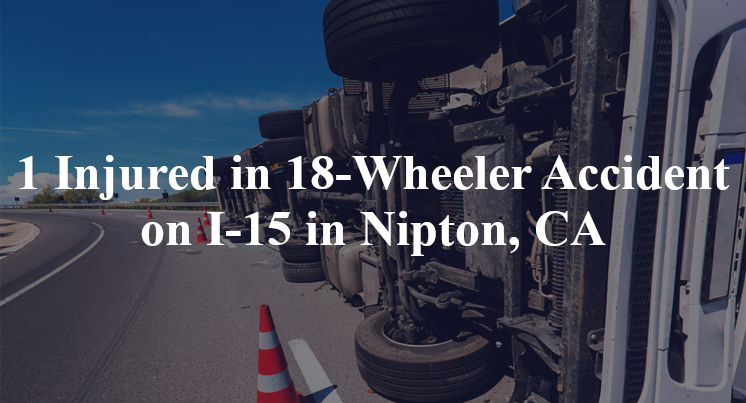
According to reports, an 18-wheeler was traveling on Interstate 15 suffered a rollover accident for unknown reasons, spilling its cargo along the highway.
When first responders arrived on the scene they found the driver seriously injured and transported them to the hospital for treatment. An update on the cause of the crash and and status of the investigation has not yet been released.
Commentary by Attorney Michael Grossman
When an 18-wheeler rolls over on the highway and spills its cargo, the first question anyone should ask is: What went wrong? According to early reports, this crash happened on Interstate 15, but officials haven’t yet said what caused the rollover. Until they do, we’re left with a lot of unanswered questions—and those questions matter.
The driver was seriously injured and taken to the hospital, but we don’t yet know whether the truck rolled due to speed, mechanical failure, improper loading, or something else entirely. Each of those scenarios points to a very different source of responsibility.
Rollover Accidents Don’t Just Happen
It’s easy to think of a rollover as a fluke, but in my experience, there’s always a cause. In fact, rollovers are often the result of multiple failures coming together—excessive speed through a curve, an improperly secured load, or a sudden overcorrection by the driver. The question is: which of those failures apply here?
This is where cargo records and electronic evidence come into play. If the load wasn’t secured properly, the rollover may have been set in motion long before the truck ever tipped. I’ve handled cases where a simple misstep in the loading bay—like failing to use the right tie-downs or stacking materials too high—caused a load to shift and take the entire vehicle with it.
On the other hand, if the driver took a turn too fast or swerved abruptly, black box data can show that. The truck’s engine control module (ECM) often records key data like speed, brake pressure, and steering input in the moments before a crash.
Cargo Spills Raise Even More Questions
When a truck spills its load all over the highway, that’s not just a cleanup issue—it’s a clue. What was the cargo? Was it properly balanced and secured? Was the trailer appropriate for what it was carrying? These are questions that can help determine whether the trucking company or a third-party loader contributed to the risk of rollover.
In one case I worked on, a flatbed trailer was loaded with metal coils in a way that violated basic industry standards. When the driver made a routine lane change, the entire load shifted, and the truck flipped. The driver was blamed at first, but the investigation showed he never had a chance—because the load never should have been on the road that way in the first place.
Key Takeaways
- The cause of the rollover crash on I-15 has not yet been determined, and multiple factors may be involved.
- Rollover incidents are often linked to speed, driver input, mechanical failure, or improperly secured cargo.
- Black box data and cargo loading records will be critical to understanding what caused the truck to tip over.
- Cargo spills are not just a side effect—they may point to deeper problems with how the load was handled.
- A full investigation is needed to determine whether this crash was the result of driver error, equipment failure, or negligence elsewhere in the chain.

 call us
  Email Us
  Text us