
Hernando County, FL — January 12, 2025, Two people were killed following an 18-wheeler accident that occurred at around 2:00 P.M. on SR 50.
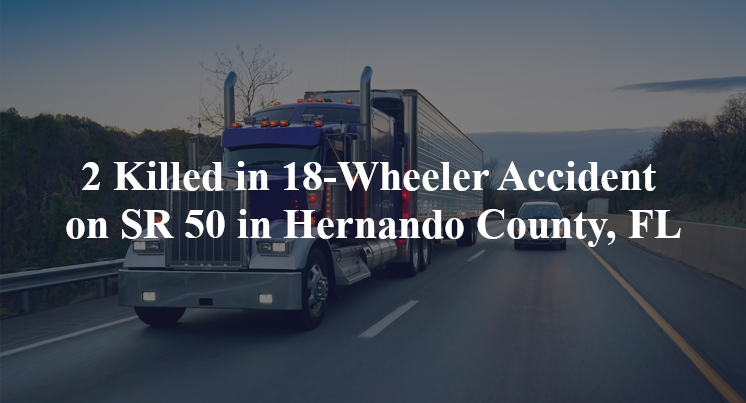
An investigation is underway into an 18-wheeler accident that left two people dead during the afternoon hours of January 2nd. According to official reports, the accident occurred at the intersection of State Road 50 and US 301 when a Ford Focus reportedly turned into the path of an 18-wheeler where it was struck. The Ford was being operated by a 72-year-old man with an 86-year-old woman when the crash took place.
When first responders arrived on the scene they found that both occupants of the Ford had sustained critical injuries which they succumbed to. At this time there are few other details available, including the names of the deceased, as well as the events the unfolded just prior to the crash, however this remains an open investigation.
Commentary by Attorney Michael Grossman
When I read about a crash like this one in Hernando County, my thoughts immediately turn to whether those affected will get the answers they deserve about what happened and why. Serious crashes like this often seem straightforward on the surface, but over the years, I’ve learned that their true causes can be more complex. That’s why any investigation must answer three critical questions to uncover the full picture.
The first question is whether the authorities conducted a thorough investigation of the crash. Official reports indicate the accident involved a Ford Focus turning into the path of an 18-wheeler at the intersection of SR 50 and US 301. While this may suggest driver error, it’s vital to confirm whether law enforcement had the time, training, and resources to properly analyze all factors involved. Accident reconstruction, witness statements, and scene evidence are essential to understanding the dynamics of the crash. Without these elements, important details may be overlooked.
Next, it’s crucial to ask whether anyone has examined the possibility of a vehicle defect. Mechanical failures, such as brake malfunctions or steering issues, could have influenced the Ford’s ability to avoid the collision or the truck’s ability to stop. Unfortunately, vehicle defects are often underexplored in crash investigations. If the vehicles involved are not preserved for forensic analysis, evidence that could explain the crash may be lost. Ensuring the vehicles are carefully examined by experts can provide clarity about whether a defect contributed to the events.
Finally, we must determine if all relevant electronic data related to the crash has been collected. Modern vehicles often store critical information in their electronic control modules, commonly referred to as “black boxes.” These can provide valuable insights into speed, braking, and other factors leading up to the collision. Additionally, video footage from nearby businesses, traffic cameras, and even cell phone data from those involved may help reconstruct the events. However, this data can be lost or overwritten if not promptly secured, making its collection a time-sensitive priority.
Answering these questions is not just about assigning responsibility; it’s about understanding what happened to prevent similar incidents in the future. Crashes involving large commercial vehicles are particularly complex, and every aspect of the investigation must be handled meticulously to ensure no detail is missed.
Ultimately, it’s the responsibility of the community and legal professionals to ensure that these questions are answered for the families of those involved. While nothing can undo the loss, a thorough investigation can provide clarity and, perhaps, a path forward for those seeking accountability or closure.

 call us
  Email Us
  Text us