
Hidalgo County, TX — September 17, 2025, Yonari Alcala was injured in a truck accident at about noon on F.M. 2812 near Edinburg.
A preliminary accident report indicates that a westbound 2007 Kenworth semi-truck lost control on a wet road near Roma Street due to an issue with its brakes and collided with an eastbound 2017 Chevrolet Malibu.
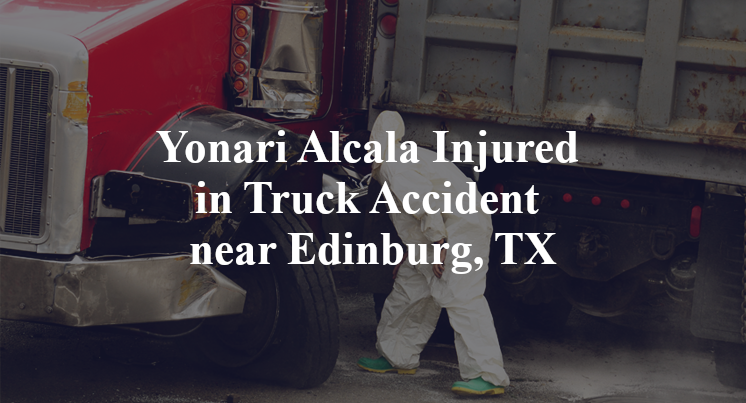
Chevrolet driver Yonari Alcala, 30, was seriously injured in the crash, according to the report.
The truck driver and the baby riding with him were not injured, but he was cited for speeding after the crash.
Authorities have not released any additional information about the Hidalgo County crash at this time.
Commentary by Attorney Michael Grossman
When people read that a semi-truck lost control, crossed into oncoming traffic, and left someone seriously hurt, the first thing they often wonder is: How does something like that even happen? That’s exactly the right question, and in this case, we don’t have many answers yet.
According to the report, the truck lost control due to a “brake issue” on a wet road and then collided with an oncoming car. That tells us what physically happened, but not why it happened. “Brake issue” is a vague phrase. Was it a mechanical failure? Poor maintenance? Driver error? Each possibility raises a different set of questions and points toward different people who might bear responsibility.
And while the driver was cited for speeding, we still don’t know how fast he was going or whether speed actually caused the brakes to fail, or if the brakes failed before the driver lost control. That sequence matters a lot when you’re trying to figure out whether this was just a weather-related incident, or something preventable.
Let’s break down what needs to be looked at.
Was This a Maintenance Failure?
Brakes don’t typically fail out of nowhere. If a truck’s brakes gave out during regular driving, we need to know:
- When were they last inspected?
- Who maintained them?
- Was this failure preventable with proper upkeep?
In my experience, problems like this often trace back to a breakdown in fleet maintenance, whether it’s a skipped inspection or a company choosing not to replace worn parts to save time or money.
Was the Driver at Fault?
The trucker was cited for speeding, which complicates things. It’s not clear whether that speed was inappropriate for road conditions or over the posted limit, but either way, it opens the door to more questions:
- Did the trucker have a history of speeding or other violations?
- Was he under pressure to meet a deadline?
- Was the company monitoring his driving behavior?
This is where technology comes in. The engine control module (ECM), or “black box,” can show vehicle speed, braking patterns and other vital data. If the truck had in-cab cameras, they may show whether the driver was distracted, asleep, or otherwise impaired.
Could This Have Been Prevented?
I handled a case not long ago where a truck driver with multiple prior firings was hired anyway. The company’s screening process was basically a short road test that couldn’t possibly evaluate the driver’s ability to handle emergencies or poor weather. If something like that happened here—if the driver wasn’t properly vetted or trained—then the company may share a large part of the blame.
The presence of a baby in the truck raises yet another concern. It’s unusual for a commercial trucker to be transporting a child. That may not have caused the crash, but it’s worth asking whether it was a distraction—and whether the company even knew it was happening.
Key Takeaways:
- The crash was reportedly due to a “brake issue,” but it’s not clear what caused that failure, or whether it was avoidable.
- The trucker was cited for speeding, but we don’t yet know how that connects to the loss of control.
- Critical evidence — like ECM data, maintenance records and in-cab camera footage — will be key to understanding what happened.
- The trucking company’s hiring, training and oversight practices may be just as important as the driver’s actions.
- Accountability depends on a full investigation; not just of the driver, but of everyone responsible for putting that truck on the road.

 call us
  Email Us
  Text us