
Wallingford, CT — November 11, 2024, William Risley was killed in a truck accident at approximately 2:00 p.m. along Interstate Highway 91.
According to authorities, 56-year-old William Risley was traveling in a motor vehicle on I.H. 91 in the vicinity between S.H. 68 and S.H. 15 when the accident took place.
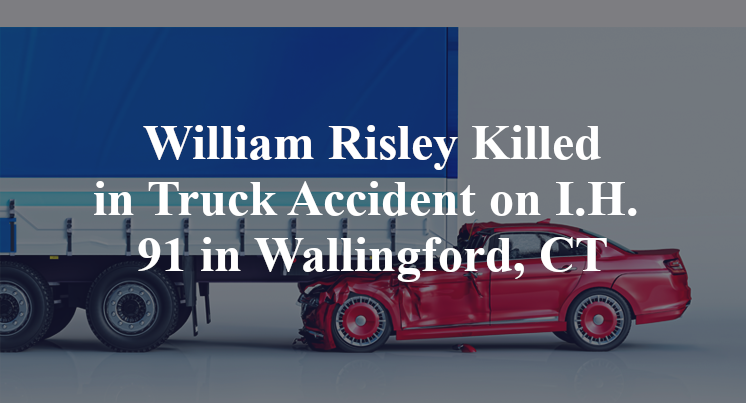
The cause of the accident remains unclear. Officials indicate that, for as yet unknown reasons, the vehicle collided with the rear-end of the trailer being hauled by an 18-wheeler. Risley suffered reportedly critical injuries as a result of the wreck; he was transported to a local medical facility by EMS in order to receive immediate treatment. However, he was ultimately unable to overcome the severity of the injuries he had sustained in the crash, having there been declared deceased. No other injuries have been reported. Additional details pertaining to this incident are not available at this point in time. The investigation is currently ongoing.
Commentary by Attorney Michael Grossman
When accidents like this happen, people tend to assume they’re simply the result of driver error or poor timing. However, in my experience, crashes involving trucks often call for a deeper look into several potential factors.
Rear-end collisions with large trucks often have complex causes, and they’re not always due to a simple lack of attention from the trailing vehicle. Large trucks tend to travel at slower speeds than most passenger vehicles, and their slower acceleration and braking can catch other drivers off guard, especially in high-traffic areas or when speeds fluctuate suddenly. Investigators will need to understand whether road design, traffic flow, or truck positioning in the lane played a role in the crash. Any of these elements could contribute to a situation where a trailing driver finds themselves with insufficient time to react.
Additionally, it’s important to consider the safety protocols and visibility measures on the truck itself. Large trucks are expected to meet visibility standards, including functional lights and reflective materials that make them more noticeable to other vehicles, especially in daylight. If any of these measures were lacking or malfunctioning, the trucking company could share some responsibility for the conditions that led to the collision. This raises the issue of companies maintaining strict adherence to safety protocols—not only for their drivers but for everyone on the road.
Ultimately, the goal is to uncover the truth and provide answers to those affected by the accident. Even if it requires conducting an independent investigation to obtain critical evidence, it’s essential to consider every factor to ensure that those impacted by the accident receive the clarity and closure they deserve.

 call us
  Email Us
  Text us