
Sacramento, CA — June 8, 2025, One person was killed and one was injured following a box truck accident that occurred at around 4:20 A.M. on I-5.
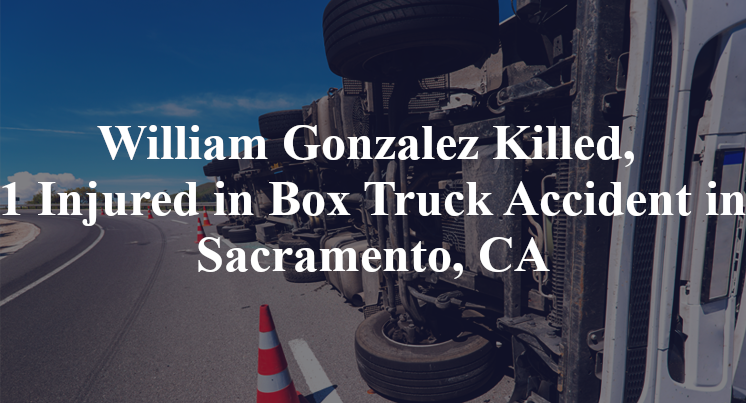
According to official reports, a box truck with William Gonzalez as a passenger was traveling on Interstate 5, when for unknown reasons the truck lost control and left the roadway where it struck a tree, ejecting Gonzalez.
When first responders arrived on the scene they found Gonzalez fatally injured and pronounced him deceased, while the driver was critically injured and was transported to the hospital. The driver’s identity has not been released, and this remains an ongoing investigation.
Commentary by Attorney Michael Grossman
When a box truck leaves the road and strikes a tree—killing one occupant and critically injuring another—most people reading about it will wonder: How did the truck lose control in the first place? That’s the question that matters most here, and so far, we don’t have an answer.
Without that answer, it’s premature to point fingers. Was this the result of a mechanical failure? Was the driver speeding or distracted? Did another vehicle cut them off? We just don’t know. But if we’re serious about getting to the bottom of what happened, those are the exact questions an investigation must explore.
Getting Answers Means Getting Evidence
In my experience, the key to understanding what went wrong in a crash like this often lies in the truck’s onboard technology. Most commercial vehicles today are equipped with an engine control module—basically the truck’s “black box.” It records data about speed, braking, steering inputs, and more. That data can tell us if the driver made a sudden maneuver, lost control gradually, or never attempted to slow down at all.
If the truck had an in-cab camera system, that might show us whether the driver was alert, drowsy, or distracted. Call logs and cell phone records can also shed light on whether the driver was using a phone at the time. These are not guesses—they’re verifiable facts. But someone has to go out and get them.
Then there’s the question of ejection. Reports say the passenger, William Gonzalez, was thrown from the vehicle. That raises immediate concerns about whether he was wearing a seatbelt—or if, in some rare cases, the seatbelt or its anchor point failed. Depending on the findings, that could lead investigators to look not just at what caused the crash, but also whether any equipment malfunction or vehicle defect contributed to the outcome.
What About the Driver?
We don’t yet know the driver’s name or condition beyond what’s reported—that he’s in critical condition. That limits what we can say, but not what we should ask. If and when the driver recovers, investigators should interview him to understand his actions leading up to the crash.
It’s also worth asking who employed the driver. Did that company follow reasonable hiring and training practices? I’ve handled cases where a driver was clearly out of his depth, but it was the company that cut corners during the vetting process. A 20-minute “road test” might check a box on paper, but it doesn’t guarantee the driver is prepared for real-world emergencies.
Key Takeaways
- The cause of the crash remains unknown, and no conclusions should be drawn without a thorough investigation.
- Critical evidence may include ECM data, in-cab video, and phone records, all of which can shed light on the truck’s behavior and the driver’s actions.
- The passenger’s ejection raises serious questions about seatbelt use or potential mechanical failure.
- The employer’s role could be relevant, depending on how the driver was trained, screened, and supervised.
- Accountability depends on evidence, not assumptions—meaning a deep dive into the facts is essential.

 call us
  Email Us
  Text us