
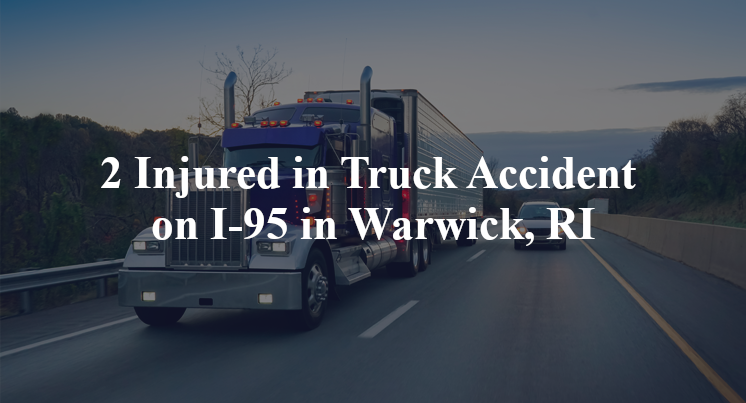
Warwick, RI — October 21, 2025, two people were injured in a multi-vehicle truck accident on northbound Interstate 95.
Authorities said a semi-truck overturned after swerving in an attempt to avoid hitting two cars that had slowed down because of a two-vehicle accident near exit 24A. The truck hit one of the cars before it rolled over.
Both drivers were hospitalized with unspecified injuries after the crash, according to authorities. The drivers involved in the earlier crash were taken to the hospital as well.
The truck driver is expected to be cited because the truck, which was carrying gravel, was overweight, authorities said.
Authorities have not released any additional information about the Kent County crash at this time. The accident is still under investigation.
Commentary by Attorney Michael Grossman
When people hear that a gravel truck rolled over on I-95, injuring multiple people, one question tends to jump out: How does something like this even happen? Especially on a major highway in broad daylight?
Authorities say the truck swerved to avoid two cars that had slowed because of an earlier crash. In the process, it reportedly hit one of those cars and then overturned. That chain reaction sounds simple enough, but there’s far more to unpack here, especially now that officials say the truck was overweight.
Any time a commercial truck overturns, especially one hauling loose materials like gravel, I start thinking about the vehicle’s load, its stability and whether the driver had enough control to avoid a rollover. Trucks are supposed to be engineered to handle evasive maneuvers, even sudden ones, without flipping. When they don’t, that often points to an issue with weight distribution, load securement or both.
Authorities say this truck was overweight. That’s not just a regulatory footnote. It’s a clue. An overloaded truck takes longer to stop, reacts unpredictably to steering input and carries a higher risk of tipping, especially if the cargo isn’t evenly distributed. Whether the truck was overloaded because the shipper added too much gravel, or because the driver or company failed to verify the weight, is a critical question that deserves thorough investigation.
It’s also not clear whether the gravel inside the truck shifted during the swerve. Load shift is a serious hazard in dump-style trucks, and if it happened here, that may have contributed to the rollover. Investigators should be looking at loading records, weigh station logs and any available black box data to piece together how much the truck was carrying and how it handled leading up to the crash.
Then there’s the timing. This crash happened after another collision had already slowed traffic. That raises a question about situational awareness: Did the truck driver recognize the slowdown in time? Was he distracted, fatigued or following too closely? Cell phone records, in-cab cameras and engine control module data will help answer that.
Finally, we can’t overlook the role of the trucking company. Was the driver properly trained to handle emergency maneuvers with a full gravel load? Did the company verify the truck wasn’t overloaded before sending it out? These are basic responsibilities that go to the heart of safe operations. If corners were cut, then this may not be just about driver error. It could be a systemic failure.
Key Takeaways:
- A truck overturning during an evasive maneuver often signals problems with cargo weight or load stability.
- The truck was reportedly overweight, which may have impaired its ability to avoid the crash and contributed to the rollover.
- Investigators should examine weigh records, loading procedures and black box data to reconstruct what happened.
- It’s unclear whether shifting gravel played a role in the rollover, a key question for understanding fault.
- The trucking company’s training and oversight practices deserve just as much scrutiny as the driver’s actions.

 call us
  Email Us
  Text us