
Vigo County, IN — June 18, 2025, one person was injured in a truck accident at about 5:30 p.m. on westbound Interstate 70.
Authorities said traffic slowed near mile marker 9 as workers removed a tree that had fallen on the westbound lane, leading a semi-truck to crash into another semi-truck that had stopped in front of it.
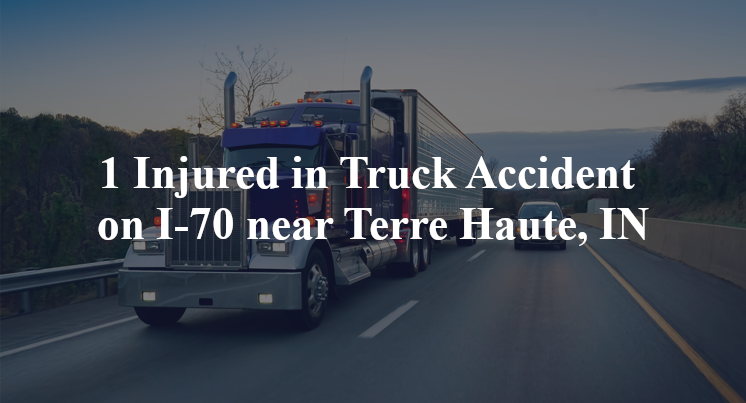
The truck driver has to be extricated from the vehicle before being airlifted to a local hospital with unspecified injuries, according to authorities.
No other injuries were reported in the crash near Terre Haute.
Authorities have not released any additional information about the Vigo County crash at this time.
Commentary by Attorney Michael Grossman
When folks hear that one truck rear-ended another on the highway, their first thought is often, “That driver must not have been paying attention.” That might be true, but it’s not the whole picture. Especially not when the crash happens near stopped traffic and a road crew is clearing debris. The real question is: What exactly caused the following truck to fail to stop in time?
To answer that, we need to look beyond the initial police report. Depending on whether the rear truck was already slowing, distracted or possibly even dealing with a brake failure, very different legal and safety issues come into play. Unfortunately, those key details are missing right now.
The only thing we know for sure is that one truck hit another after traffic slowed because workers were removing a fallen tree. But that raises more questions than it answers. Was the rear truck traveling too fast for conditions? Was the driver distracted by a cell phone or GPS device? Did the lead truck come to a sudden stop that left the trailing driver no time to react?
Getting to the truth of what happened here means digging into the kind of evidence most people don’t think about: Was there dashcam footage? Did the truck’s engine control module (ECM) record hard braking or a failure to brake at all? Did the company that hired the driver have any policies about driving in work zones or approaching stopped traffic?
I’ve worked on crashes where those kinds of answers made all the difference. In one case, the black box showed the driver never even touched the brakes until it was too late. In another, phone records revealed the driver was on a call at the exact moment of impact. Without that kind of concrete evidence, it’s all too easy to make assumptions that don’t hold up.
What concerns me most is how quickly everyone tends to assign blame without doing that deeper dive. Rear-end crashes involving 18-wheelers often seem straightforward, but when you pull back the curtain, you find a web of decisions and circumstances that need to be unraveled before anyone can be held truly accountable.
Key Takeaways:
- It’s not yet clear why the rear truck failed to stop for slowing traffic; several explanations are possible.
- Critical evidence like ECM data, dashcam footage and cell phone records could clarify whether this was driver error or something else.
- Work zone conditions and the nature of the traffic slowdown may factor into who bears legal responsibility.
- Thorough investigations are essential to ensure the right parties are held accountable, not just the most obvious ones.
- Trucking company policies and training procedures may play a role, depending on what the evidence shows.

 call us
  Email Us
  Text us