
Sunrise, FL — May 21, 2025, one person was killed and two others were injured in a truck accident at about 3 a.m. on the Sawgrass Expressway.
Authorities said a semi-truck and another vehicle were involved in a crash that shut down all northbound lanes of the highway between Oakland Park Boulevard and Commercial Boulevard.
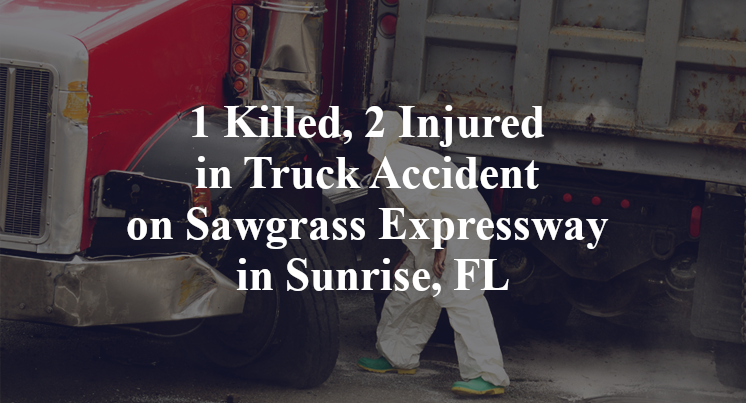
One person, a 37-year-old woman, died in the crash, while two others were hospitalized with unspecified injuries, according to authorities. Their names have not been made public at this time.
Authorities have not released any additional information about the Broward County crash. The accident is still under investigation.
Commentary by Attorney Michael Grossman
When people hear about a fatal truck crash like the one that shut down the Sawgrass Expressway in the early hours of the morning, their first questions are often the right ones: How did this happen? Who’s responsible? And are we getting the whole story?
At this point, not much has been made public beyond the bare facts: one person died, two were hospitalized and a semi-truck was involved. But even without all the details, it’s worth pointing out just how many unanswered questions there are that could make a major difference in understanding this crash and holding the right parties accountable.
We don’t yet know what led to the collision. Did one of the vehicles make an improper lane change? Was the truck stopped, slowing, or moving at highway speed? Depending on whether the truck struck the other vehicle or vice versa, the legal implications shift significantly.
In cases like this, the single most important tool for getting to the truth is evidence. That means more than just police reports. A proper investigation should examine:
- Engine control module (ECM) data, which can show the truck’s speed, braking and throttle position leading up to the crash.
- Dash cam or in-cab camera footage, if available, which can clarify lane positions and potential driver errors.
- Cell phone records, which could rule out or confirm distractions.
- Hiring and training records, which speak to whether the trucking company exercised proper judgment in putting this driver on the road.
It’s easy to assume that the truck driver must be at fault in a crash like this, but I’ve litigated enough truck cases to know that’s not always true, and even when a trucker is responsible, they’re rarely the only one who contributed to the crash. Companies can cut corners on hiring, skip safety protocols or push drivers to stay behind the wheel too long. In some cases, the vehicle itself is poorly maintained or overloaded.
Authorities say the crash is still under investigation. That’s expected. But I’ve also seen situations where key evidence is lost or goes uncollected because no one pushes hard enough to preserve it in time. The sooner an independent investigation gets underway, the better chance there is of preserving dash cam footage, black box data and cell phone logs, before they’re deleted or overwritten.
Without that evidence, victims and their families are often left with more questions than answers.
Key Takeaways
- It’s not yet clear how the truck and other vehicle came to collide; critical questions remain unanswered.
- ECM data, camera footage and phone records are essential for understanding what happened.
- Fault may lie with more than just the truck driver, depending on what hiring and training records reveal.
- The sooner key evidence is collected, the better the chance of uncovering the truth.
- A full investigation is necessary to hold the right parties accountable, not just the most obvious ones.

 call us
  Email Us
  Text us