
Live Oak, CA — June 27, 2025, one person was killed due to a truck accident shortly before 4:30 a.m. along State Highway 99.
According to authorities, the accident took place on S.H. 99 in the vicinity of Paseo Road.
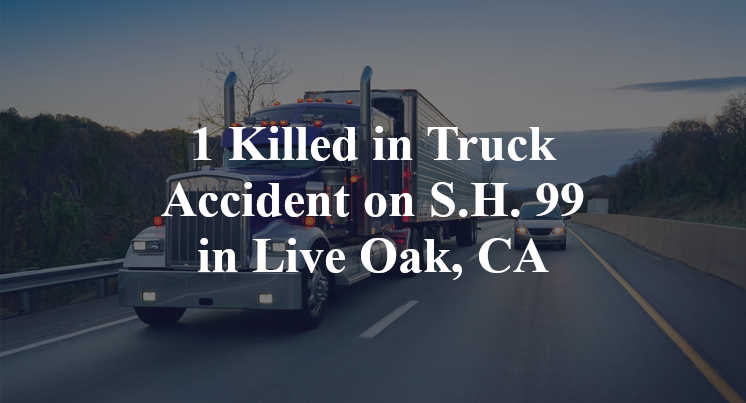
Details surrounding the accident remain scarce. Preliminary reports state that, for as yet unknown reasons, a collision took place between an 18-wheeler and another motor vehicle. One person who had been involved in the wreck reportedly sustained fatal injuries. Additional information pertaining to this incident—including the identity of the victim—is not available at this point in time. The investigation is currently ongoing.
Commentary by Attorney Michael Grossman
When a crash happens in the pre-dawn hours between a passenger vehicle and an 18-wheeler, and someone doesn’t make it out alive, people naturally want to know: Was this preventable? Without knowing who did what, it’s too early to point fingers—but that doesn’t mean we’re short on questions that need to be answered right away.
First, the time of day matters. Crashes that happen around 4:30 in the morning are often linked to low visibility, fatigue, or a combination of both. For truck drivers who’ve been on the road all night—or drivers just waking up and hitting the road too quickly—reaction time and awareness are often compromised. Investigators need to establish how long each driver had been operating and whether either one was dealing with exhaustion, distraction, or a medical issue.
Second, visibility and lighting conditions along that stretch of Highway 99 may be relevant. If the passenger vehicle had its lights off or was stopped in the roadway, that would change the analysis. Conversely, if the 18-wheeler was drifting from its lane, turning across traffic, or operating without proper lights or reflectors, that introduces another layer of risk. In these situations, ECM data and in-cab video—if available—can provide key insight into vehicle behavior just before the crash.
Mechanical factors can’t be ruled out either. Tire blowouts, brake failures, steering issues—I’ve seen each of those become the linchpin in fatal crash cases where initial reports were inconclusive. For that reason, every commercial truck involved in a fatality needs to undergo a full post-crash inspection before anyone reaches a conclusion about fault.
Finally, the layout of the road itself deserves scrutiny. Were there any obstacles, confusing signage, or unusual lane changes near the scene? Was construction underway? Sometimes it’s not just about driver conduct, but whether the road environment made an already difficult situation worse.
Until those facts come to light, all we know is that someone lost their life in a collision involving a commercial truck. It’ll take more than assumptions to understand who’s responsible—it’ll take evidence.
Key Takeaways
- The early morning timing raises questions about fatigue, low visibility, and diminished reaction time for all drivers involved.
- Black box data, dash cam footage, and phone records will be crucial to reconstruct the moments leading up to the crash.
- Vehicle inspections may reveal mechanical issues that contributed to the collision but aren’t visible in initial reports.
- Road layout and environmental conditions—lighting, signage, or construction—could also play a role in how the crash unfolded.
- A full investigation is the only way to move from uncertainty to accountability.

 call us
  Email Us
  Text us