
Kent, NY — June 23, 2025, one person was killed in a truck accident at about 2 p.m. on westbound Interstate 84 near the interchange with State Route 311.
Authorities said a pickup hauling a trailer collided with a semi-truck west of the interchange, closing both westbound lanes of the interstate for about eight hours.
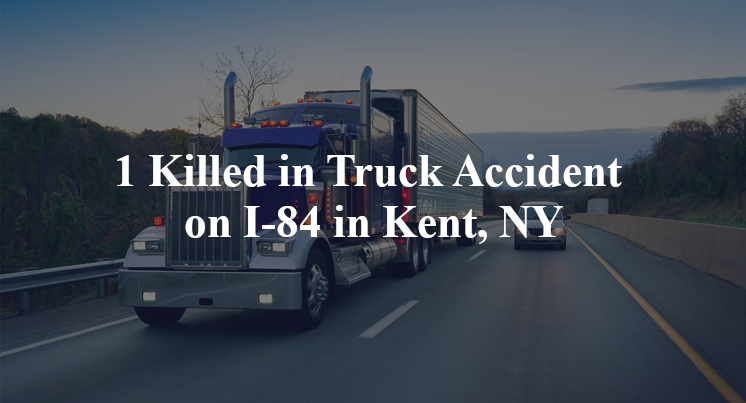
The man driving the pickup died in the crash, according to authorities. His name has not been made public yet.
No other injuries were reported.
Authorities have not released any additional information about the Putnam County crash at this time. The accident is still being investigated.
Commentary by Attorney Michael Grossman
When people hear about a crash involving a pickup and an 18-wheeler that shuts down a major highway for eight hours and leaves one driver dead, the first thing they want to know is: How did this happen? And right now, the short answer is we don’t know. Authorities say a pickup pulling a trailer collided with a semi-truck on westbound I-84 near State Route 311, but they haven’t released any details about what actually caused the collision.
That leaves several critical questions unanswered. Was either vehicle changing lanes? Did one lose control? Was the pickup stopped when it was hit, or moving? Each scenario points to a very different legal analysis, and it matters because the evidence needed to find the truth depends on knowing what kind of event we’re even dealing with.
In cases like this, it’s important to look beyond just what the police say happened at the scene. Truck crash investigations should dig into the electronic data that modern rigs carry, especially the engine control module (or ECM), which can show the truck’s speed, braking and steering inputs in the moments leading up to the crash. If the truck was equipped with in-cab cameras, that footage could be vital. So could cell phone records, especially if there’s any chance distracted driving played a role.
Depending on how the collision occurred, we may also need to ask hard questions about the trailer the pickup was pulling. Was it properly secured? Was there a mechanical failure? But just as important is a look at the semi-truck itself. Was it in good working condition? Was the driver qualified and alert? What kind of training and vetting did the trucking company require before putting that driver behind the wheel?
I’ve handled plenty of cases where the crash didn’t just come down to what the driver did in the moment, but how the company trained (or failed to train) that driver, and whether they should have hired that person in the first place. In one case I tried, the driver had a record of getting fired from multiple trucking jobs, but the company’s screening process was so flimsy that they hired her anyway. After the evidence came out, it was obvious that the company’s shortcuts contributed just as much to the crash as the driver’s own mistakes.
Right now, we don’t know whether something similar happened here. But that’s exactly why it’s so important to do a thorough, independent investigation, because that’s how you move from speculation to facts and from blame to accountability.
Key Takeaways:
- Authorities haven’t released enough details to determine how the crash occurred or who was at fault.
- Critical evidence like black box data, in-cab video and phone records may help clarify what went wrong.
- Depending on how the crash unfolded, both the pickup and the semi-truck could face scrutiny.
- Trucking company hiring, training and oversight practices often play a bigger role in crashes than most people realize.
- Only a full investigation can determine who is responsible and how this crash could have been prevented.

 call us
  Email Us
  Text us