
Gray’s Creek, NC — June 24, 2025, one person was injured in a truck accident at about 10 p.m. on State Highway 87 at Sandy Hill Road.
Authorities said a semi-truck hauling live turkeys was headed south when it collided with a pickup that was turning left from Sandy Hill Road. Both trucks had red lights at the time of the crash.
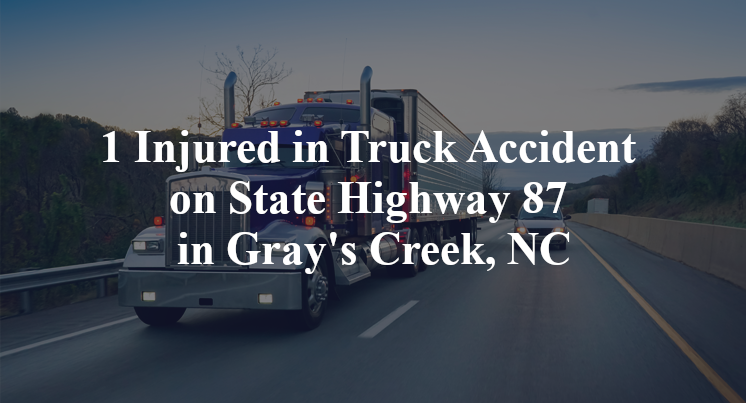
The driver of the pickup, whose name has not been made public yet, was severely injured in the crash, according to authorities.
No other injuries were reported.
Authorities have not released any additional information about the Cumberland County crash. The accident is still being investigated.
Commentary by Attorney Michael Grossman
When a crash involves a semi-truck hauling live animals like the one recently reported in Gray’s Creek, there are bound to be questions beyond the immediate scene. Most people reading the article probably asked themselves the same thing: If both vehicles had red lights, how did this even happen? That’s not just a passing thought. It’s a critical legal question.
The fact that both drivers supposedly had red lights introduces a layer of complexity. A red light means stop, so the first thing we need to know is which vehicle actually entered the intersection against the signal, or whether either of them did. Unfortunately, that’s not something the authorities have explained yet.
What we do know is that the pickup was turning left, and the semi-truck was traveling straight through the intersection. That matters because depending on whether the semi was already in the intersection when the light changed, or whether the pickup turned in front of it after the red, entirely different questions arise. Without more detail, it’s hard to say whether this was a case of misjudging a turn, a signal timing issue or something else entirely.
That’s why evidence is so important here. A crash like this almost certainly triggered the truck’s engine control module (ECM), a kind of black box that records speed, braking and throttle inputs in the seconds leading up to impact. That data can help determine whether the trucker attempted to stop, or whether he was going too fast to begin with. Similarly, any in-cab cameras or dash cams (which many commercial trucks now carry) may show whether the light was red or green at the time the truck entered the intersection.
Another key question is whether the truck driver was distracted, by a cell phone or something else. That’s not something police reports usually clarify early on, but it’s often revealed through a subpoena for phone records. I’ve handled cases where such records were the turning point, proving the driver never should’ve been behind the wheel in the first place.
And since the truck was hauling live turkeys, it’s also fair to ask whether the cargo had any role in the outcome. Did the movement of the birds affect handling? Was the load improperly secured in a way that impacted the driver’s ability to brake or steer? These aren’t far-fetched questions. I’ve litigated cargo-related truck crashes before, and sometimes the real problem lies with the way the truck was loaded or maintained, not just the person driving it.
Until we get firm answers from investigators, much remains unclear. But if past experience is any guide, a thorough legal investigation will go far beyond what appears in the initial news release.
Key Takeaways:
- If both vehicles had red lights, determining who entered the intersection first is central to assigning responsibility.
- ECM data and dash cam footage can reveal critical details like vehicle speed, braking and light status at the time of the crash.
- Cell phone records and in-cab camera footage may help determine whether the truck driver was distracted.
- Since the truck was carrying live animals, it’s important to evaluate whether the cargo affected vehicle handling or contributed to the crash.
- Real accountability depends on a deep investigation, not just surface-level reports.

 call us
  Email Us
  Text us