
Escambia County, FL — March 24, 2025, three people were injured in a truck accident at about 8 a.m. on Interstate 10 near mile marker 7.5.
Authorities said a semi-truck was headed east when it hydroplaned on the wet highway and crossed the median. It collided with a semi-truck that had been going west, causing the truck to crash into a sedan. The sedan veered off the road and overturned after the crash.
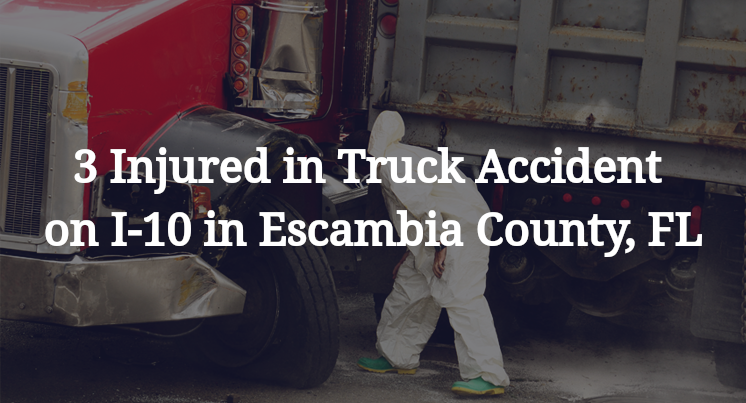
The sedan driver, a 25-year-old man from Fairhope, and the driver of the second truck, a 39-year-old man from Kissimmee, were hospitalized with critical injuries after the crash, according to authorities. The first truck driver, a 55-year-old woman from Geneva, suffered serious injuries.
Their names have not been made public at this time.
Authorities have not released any additional information about the crash, which forced the closure of all lates of I-10 for several hours. The accident is still under investigation.
Commentary by Attorney Michael Grossman
Crashes involving hydroplaning commercial trucks raise urgent questions about speed, weather conditions and whether the vehicle was being operated safely for the circumstances. In this case, reports indicate that a semi-truck traveling east on Interstate 10 lost control on a wet roadway, crossed the median, and struck another semi-truck, which in turn collided with a sedan. All three drivers were seriously or critically injured. A full investigation should determine whether this was the result of unsafe speed for weather conditions, improper vehicle handling or roadway factors that contributed to the truck’s loss of control.
One of the most pressing questions is whether the first truck driver adjusted speed appropriately for the conditions. Hydroplaning is a known risk on wet highways, especially when large commercial vehicles travel too fast for the amount of surface water present. While the posted speed limit may not have been exceeded, commercial drivers are trained to operate according to conditions, not just posted signage. Investigators should examine black box data from the truck to determine how fast it was traveling prior to losing traction.
Another critical factor is whether the roadway design or maintenance played a role. Was there standing water on the highway due to poor drainage or uneven pavement? Were warning signs in place to alert drivers to slick conditions, or had rain just started, making the road particularly dangerous?
The secondary impacts of this crash also deserve attention. The westbound truck that was struck had no opportunity to avoid the oncoming vehicle, and the sedan that was hit afterward ended up overturning. This shows how quickly one loss of control can cascade into a multi-vehicle event, particularly on divided highways where a crossover event is rare but often catastrophic. Median barriers — if not already present — should be evaluated to see whether they might have prevented the eastbound truck from entering the opposite lanes.
At this stage, the investigation is ongoing and not all facts are known. But if authorities focus only on the loss of control without considering why it happened — whether due to speed, inadequate training, roadway conditions or a combination — they risk missing important information. A thorough investigation should examine all contributing factors to determine what went wrong, so those affected by this crash will have the answers they deserve.

 call us
  Email Us
  Text us