
Cumberland County, VA — July 3, 2025, one person was injured in a truck accident at about 5:45 a.m. on State Route 45/Cumberland Road.
Authorities said a semi-truck hauling waste material collided with another vehicle north of Agee Lane, blocking both lanes of the highway for several hours. The crash also caused a fuel leak.
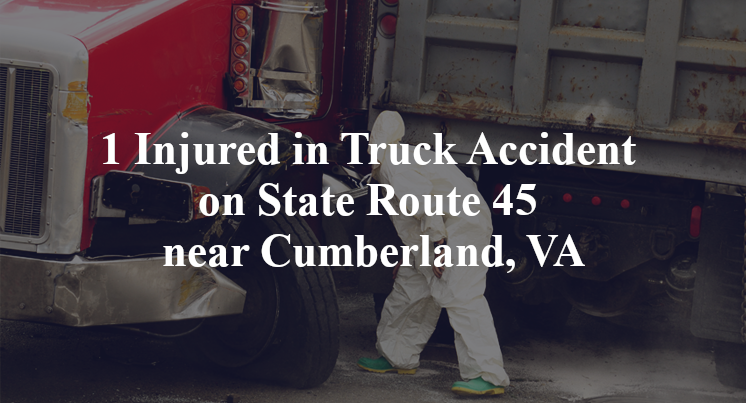
The driver of the other vehicle, whose name has not been made public yet, was hospitalized with non-life-threatening injuries after the crash, according to authorities. The truck driver suffered minor injuries.
Authorities have not released any additional information about the crash west of Cumberland at this time. The accident is still being investigated.
Commentary by Attorney Michael Grossman
When people hear that a semi-truck collided with a passenger vehicle and blocked both lanes of a highway, their first thought is often: How could something like that happen? Especially early in the morning, when traffic is typically light. But that’s exactly the kind of situation that demands a closer look, because depending on the specifics, a number of different parties might bear responsibility.
Authorities said the truck was hauling waste material and collided with another vehicle around 5:45 a.m. on State Route 45. The crash caused a fuel leak and injuries to both drivers, but beyond that we’re left with more questions than answers.
Right now, we don’t know which vehicle entered whose lane. We don’t know whether speed, distraction or visibility played a role. And we don’t know if the truck was in motion or stopped at the time of the collision. All of those details matter, and they shape how investigators, and ultimately the courts, determine who’s at fault.
That’s why in a case like this, one of the first priorities is to secure evidence before it disappears. The truck’s engine control module (ECM), often called the “black box,” can show speed, braking and throttle inputs leading up to the crash. Dash cams, if present, can provide critical footage of the moments before impact. And cell phone records may show whether either driver was distracted.
There’s also the question of whether the waste-hauling truck was properly maintained and operated. Fuel leaks don’t just happen; they’re often a sign of impact damage, but they can also point to underlying equipment failures. If something ruptured that shouldn’t have, that may indicate the truck wasn’t in roadworthy condition.
And then there’s the human factor. Was the truck driver properly trained and screened by the company that hired him? I’ve handled cases where trucking companies hired drivers with long histories of violations, or gave them barely-there road tests, and then acted surprised when those drivers caused serious crashes. That kind of short-sightedness can turn a preventable crash into a life-altering event for others on the road.
At this stage, we simply don’t have enough information to know who’s responsible. But the path forward is clear: gather the evidence, reconstruct what happened and follow the facts wherever they lead. Only then can accountability be established.
Key Takeaways:
- It’s not yet clear how or why the truck collided with the other vehicle; critical questions remain unanswered.
- Evidence like ECM data, dash cam footage and cell phone records can shed light on the truck driver’s actions before the crash.
- Investigators should also look into the truck’s maintenance history and the hiring and training practices of the trucking company.
- A fuel leak suggests the possibility of equipment damage or failure, which may be relevant to determining fault.
- True accountability depends on a thorough, evidence-driven investigation, not assumptions.

 call us
  Email Us
  Text us