
Buckeye, AZ — June 13, 2025, one person was injured in a truck accident involving an alleged drunk driver on Interstate 10.
Authorities said they received reports of a semi-truck driving erratically and forcing other vehicles off the road on I-10.
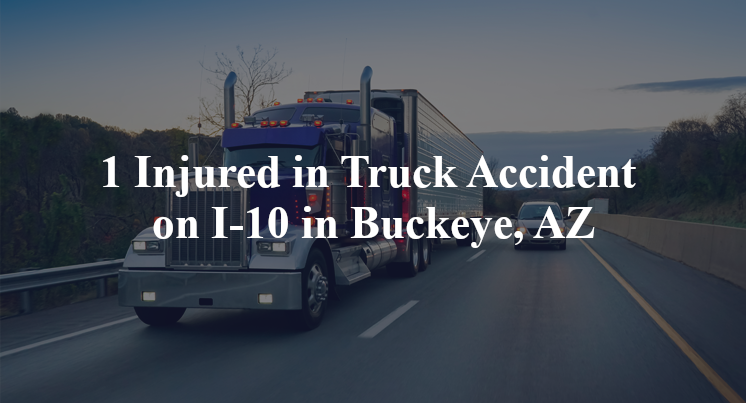
The truck veered across all lanes of the highway when state troopers attempted a traffic stop, hitting a box truck and causing it to overturn, according to authorities.
Authorities noted signs of intoxication once the driver was stopped. Tests showed his blood alcohol content was 0.347, so he has been charged with felony endangerment and driving under the influence of alcohol, authorities said.
The box truck driver suffered unspecified injuries in the crash, according to authorities.
Authorities have not released any additional information about the Maricopa County crash.
Commentary by Attorney Michael Grossman
When people read about a crash like this the first question they tend to ask is, “How on earth did that happen?” But I think an even better question is, “How was a driver with a blood alcohol level of 0.347 even behind the wheel in the first place?”
To put that blood alcohol content in context, 0.08 is the legal limit for non-commercial drivers in most states. For commercial truck drivers, federal regulations set the limit at 0.04. This driver’s level wasn’t just over the limit; it was more than eight times what’s legal for someone operating an 80,000-pound vehicle. That’s not a gray area. That’s a red flag the size of the Grand Canyon.
But while the charges this driver now faces are serious, they don’t tell the whole story. The bigger question is how someone that impaired got into a truck in the first place. Did the company that employed him run proper background checks? Did they conduct random drug and alcohol screenings like federal rules require? Were there previous red flags in his driving record or employment history that should have raised alarms?
These are questions that don’t get answered in a police report. They’re answered through investigation.
In my experience, it takes more than a field sobriety test and a BAC reading to fully understand a crash like this. Investigators should be looking at:
- In-cab cameras, if available, to capture the driver’s behavior leading up to the wreck.
- Cell phone records, to see if the driver was texting, talking or using apps while driving.
- Engine control module (ECM) data, to reconstruct the truck’s speed, braking and lane changes.
- Driver logs and employment records, to examine how recently the driver was hired, whether he was properly vetted and if he had a history of substance issues.
In a case I handled not long ago, we found out through discovery that the driver who caused a crash had been fired multiple times before, and the company that hired him conducted nothing more than a 20-minute road test before giving him the keys to a rig. That’s not due diligence. That’s gambling with people’s lives.
While the driver may face criminal charges, a full investigation could reveal whether his employer also bears responsibility. If a trucking company failed to properly vet, train or monitor their driver, then their decisions may have played just as big a role in this crash as anything the driver did behind the wheel.
It’s also worth pointing out that there’s no word yet on the box truck driver’s condition, only that they were injured. Whether those injuries were minor or severe, the question remains: Could this have been prevented if the trucking company had done its job?
Key Takeaways:
- A BAC of 0.347 is not a borderline case. It’s extreme impairment and should raise questions about how the driver was allowed to operate a truck.
- Investigating the trucking company’s hiring and monitoring practices is just as important as holding the driver accountable.
- In-cab cameras, ECM data and phone records are vital tools in determining what really happened.
- A full investigation can uncover whether this crash was a single bad decision or a chain of preventable failures.
- Accountability in truck crashes often extends beyond the driver to those who put him on the road in the first place.

 call us
  Email Us
  Text us