
Albuquerque, NM — June 24, 2025, one person was killed in a truck accident at about 2:30 p.m. on westbound Interstate 40 near San Mateo Boulevard.
Authorities shut down the interstate after a fatal multi-vehicle accident. Media reports indicate the crash involved a semi-truck, a Dodge pickup and a Hyundai sedan.
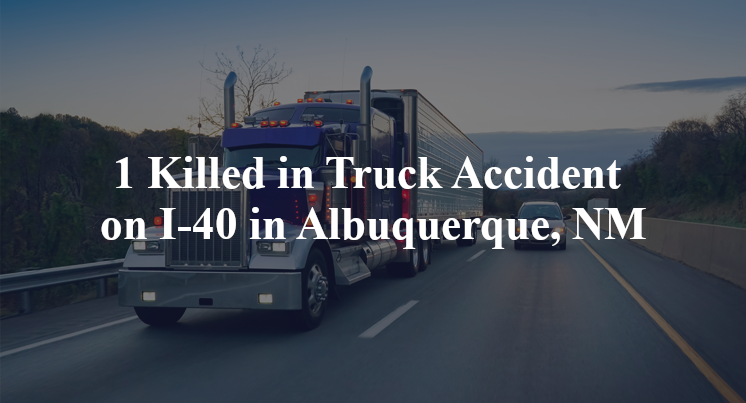
The pickup driver, whose name has not been made public yet, died at the scene of the crash, according to media reports.
No other injuries were reported.
Authorities have not released any additional information about the crash at this time. The accident is still being investigated.
Commentary by Attorney Michael Grossman
When someone hears about a fatal crash involving a semi, a pickup, and a sedan, the first instinct is to wonder: How did this happen? Was the truck moving when the crash began, or had something gone wrong that caused the other vehicles to react? With three vehicles involved and only sparse details available, we’re left with more questions than answers at this stage.
One key point here is that we don’t yet know how the crash sequence started. Did the 18-wheeler collide with one of the smaller vehicles, or was it the other way around? If the pickup struck the truck from behind, that paints one picture. But if the truck rear-ended or merged into the pickup or Hyundai, that’s a completely different scenario. Right now, that basic information hasn’t been made public.
That’s not a small detail. Figuring out who hit whom, and why, is central to determining fault. The only way to get there is with evidence, and in cases involving commercial vehicles, that often goes far beyond eyewitness accounts. For instance, the truck’s engine control module (ECM) could show its speed, braking and throttle inputs in the moments before the crash. Dash cam footage, if available, might show whether another vehicle made a sudden lane change or if the trucker failed to react to slowing traffic.
There’s also the question of driver behavior. Was the trucker distracted? On the phone? Tired? These are all critical issues that often come to light only through subpoenaed phone records, in-cab camera footage or inspection of the driver’s logs and schedule. In my experience, trucking companies aren’t always quick to volunteer this information unless someone forces the issue.
And we shouldn’t overlook the company’s role. Was this driver properly trained and supervised? Was their driving record clean? I’ve handled cases where trucking companies cut corners on vetting drivers, and the result was an unqualified person behind the wheel of an 80,000-pound vehicle. When that happens, the company’s choices, not just the driver’s, can play a major role in what went wrong.
It’s also worth noting that only one injury has been reported so far, and it was fatal. That suggests either the pickup bore the brunt of the impact or something unusual happened that left one vehicle far more vulnerable than the others. Again, we won’t know until the facts are out.
Key Takeaways:
- It’s still unclear how the crash began or which vehicle initiated contact.
- Critical evidence — like ECM data, dash cams and cell phone records — will help reconstruct the crash.
- Depending on how the crash unfolded, responsibility could lie with the truck driver, another motorist or the trucking company.
- Investigating the trucker’s background and the company’s hiring/training practices may be necessary.
- Only an in-depth, evidence-based investigation can reveal who’s truly accountable.

 call us
  Email Us
  Text us