
Update (February 13, 2025): The woman who was killed in this accident has been identified as Suzanne “Sue” Garrison, while the injured driver is Glenn Garrison.
Perma, MT — January 8, 2025, one person was killed and one was injured in a truck accident at about 4:30 p.m. on Montana Highway 200.
Authorities said a Ford Focus was heading west when it collided with an eastbound Kenworth semi-truck that was trying to turn onto Secondary Highway 382.
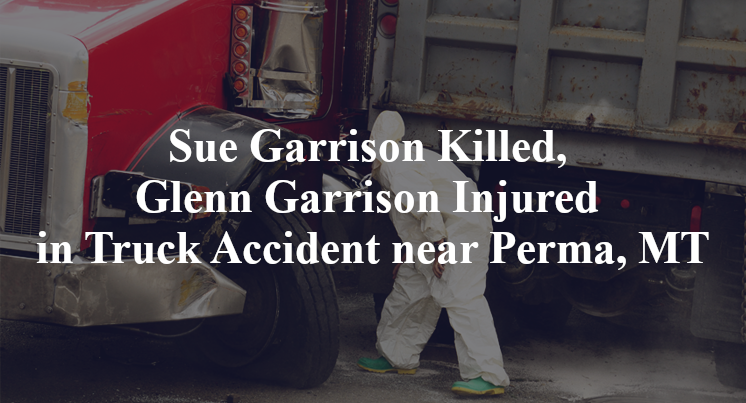
A passenger in the Ford, a 67-year-old woman, died after the crash, according to authorities, while the 67-year-old man who had been driving was transported to an area hospital with undisclosed injuries. Their names have not been released at this time.
The truck driver, a 54-year-old man, was not injured, authorities said.
Authorities have not released any additional information about the Sanders County crash, but investigators do not believe alcohol, drugs or excessive speed contributed to the accident.
The crash is still being investigated.
Commentary by Attorney Michael Grossman
When I read about a crash like this one, the first question that comes to mind is whether the truck driver exercised the necessary caution and judgment before initiating the turn. Turning across a highway, particularly when other vehicles are approaching, is one of the most dangerous actions a truck driver can take, and it demands both skill and attention to timing.
A key issue in this crash is whether the truck driver misjudged the distance or speed of the oncoming vehicle. Semi-trucks are large, slow to accelerate and take up significant space during a turn. Drivers must ensure there is ample time and room to complete the turn safely without obstructing traffic. Investigators should examine whether the driver failed to yield properly or acted negligently by initiating the turn when it wasn’t safe to do so.
The layout and conditions of the intersection are also critical factors. Was Montana Highway 200 designed to allow semi-trucks to safely execute a turn onto Secondary Highway 382? Was the intersection adequately marked with signs or signals to alert approaching vehicles to the possibility of turning trucks? Many rural intersections lack these safety features, making them inherently riskier for all drivers.
Lastly, the truck driver’s training and the trucking company’s policies should be scrutinized. Did the driver have the experience and training necessary to make safe judgments in situations like this? Was the company prioritizing safety by ensuring their drivers understood the risks of turning at such intersections, or were they operating under tight schedules that pressured drivers into risky decisions? In my experience, these systemic factors often play a hidden but significant role in crashes involving commercial vehicles.
The loss of life in this crash underscores how critical it is for drivers of all vehicles — but especially those operating large trucks — to approach highway intersections with the utmost care. My hope is that investigators will thoroughly examine every aspect of the incident, from the design of the intersection to the decisions made by the drivers involved. By doing so, they can provide answers for those affected and work to prevent similar tragedies in the future.

 call us
  Email Us
  Text us