
Lyon County, IA — October 3, 2025, Steven Cuperus was killed in a truck accident at about 2:30 p.m. on State Highway 9 east of Rock Rapids.
Authorities said a pickup was heading east when it was struck by a semi-truck heading south of County Road K-60/Indian Avenue.
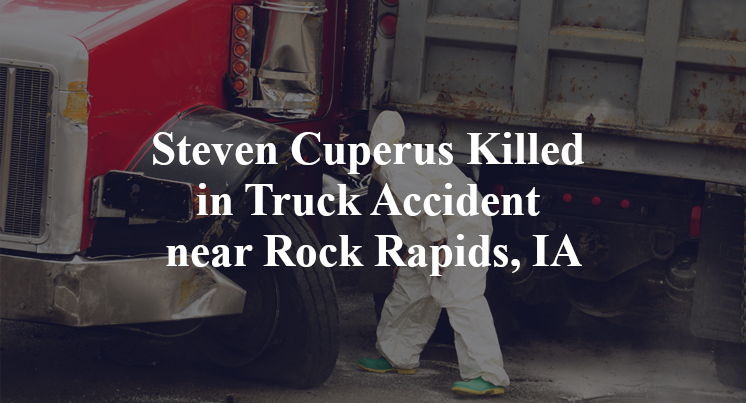
Pickup driver Steven Cuperus, 64, of George died from injuries suffered in the accident, according to authorities.
The truck driver was hospitalized with unspecified injuries, authorities said.
Authorities have not released any additional information about the Lyon County crash at this time.
Commentary by Attorney Michael Grossman
When a crash between a passenger vehicle and a semi-truck leaves someone dead, the public naturally wants to know who’s responsible. Yet early reports about this particular collision near Rock Rapids raise more questions than they answer. Most importantly: How did these two vehicles end up in each other’s path?
Authorities say the pickup was traveling east on Highway 9, while the semi was headed south on County Road K-60. The crash happened at or near the intersection of those roads. But it’s not clear who had the right of way, who entered the intersection first or whether either driver tried to stop. Depending on the layout of the intersection — whether it’s controlled by stop signs, yield signs or nothing at all — the legal analysis could vary significantly.
Unfortunately, authorities haven’t released that level of detail yet. That leaves us with unanswered questions that matter deeply to understanding how and why this crash occurred. Was the truck driver distracted? Did he blow through a stop sign? Was the pickup speeding? Was visibility a factor? Did either vehicle attempt to avoid the collision? We simply don’t know yet, and speculation doesn’t help.
What does help is evidence. In a case like this, the truck’s engine control module (ECM), often referred to as the “black box,” can show whether the trucker braked before impact, how fast he was going and whether he was accelerating or coasting into the intersection. In-cab cameras, if installed, could offer a view of both the driver’s actions and the road ahead. Cell phone records might indicate whether the trucker was on a call or texting in the moments leading up to the crash.
Beyond the technology in the truck, it’s also worth looking at the company that employed the driver. Was he properly vetted and trained? Were his driving hours in line with federal limits, or was he possibly fatigued from pushing too many miles? I’ve handled cases where it turned out a driver had a long history of violations or had been hired after being let go by several other trucking companies. When that happens, it’s often not just the driver who’s made bad choices. The company may have failed to screen him properly or overlooked red flags during hiring.
At this stage, it’s too early to draw conclusions. But it’s not too early to ask the right questions. If no one presses for answers, there’s a real risk that vital details about what happened here could be overlooked or lost.
Key Takeaways:
- Early reports don’t clarify who had the right of way or how the vehicles entered the intersection.
- Critical questions remain unanswered: Was the truck driver distracted, or did either vehicle violate a traffic control?
- Investigators should secure black box data, in-cab video and cell phone records to reconstruct the crash.
- The trucker’s employer may also bear responsibility if hiring, training or oversight was inadequate.
- Accountability depends on evidence, not assumptions, and that means someone has to dig for the truth.

 call us
  Email Us
  Text us