
Mansfield, OH — November 2, 2024, one person was killed in a single-vehicle truck accident shortly after 11:45 p.m. along Interstate Highway 71.
According to authorities, one person was traveling in a northbound 18-wheeler on I.H. 71 in the vicinity north of the exit for S.H. 97 when the accident occurred.
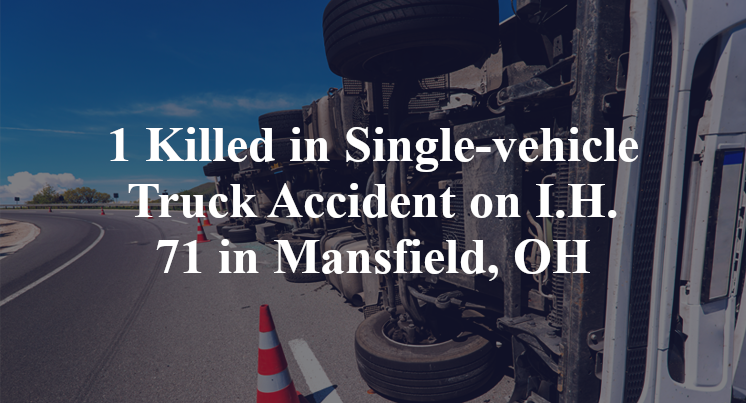
The cause of the accident remains unclear. Officials indicate that, for as yet unknown reasons, the truck failed to safely maintain its lane of travel. It reportedly veered to the right, leaving the active lanes of the highway and colliding with a guardrail and a light pole. It didn’t come to a stop until after barreling down an embankment and overturing. It reportedly caught fire, as well, over the course of the accident.
The person who had been behind the wheel of the truck suffered fatal injuries due to the wreck, according to reports, and was declared deceased at the scene. Additional details pertaining to this incident—including the identity of the victim—are not available at this point in time. The investigation is currently ongoing.
Commentary by Attorney Michael Grossman
When a single-vehicle crash like this occurs, many people may assume it’s the result of simple driver error or fatigue. However, based on my experience, the reality is often more complex, particularly when large commercial trucks are involved. Accidents of this nature require a thorough investigation to determine if other factors contributed to the loss of control.
One of the first elements to examine is whether any mechanical issues could have played a role in the crash. Commercial trucks are intricate machines that rely on consistent maintenance to operate safely. A problem with steering, brakes, or even tire pressure could easily cause a vehicle to veer off the road, particularly at highway speeds. Inspecting the truck’s maintenance records may help clarify if a mechanical failure was a factor or if upkeep standards were less rigorous than they should have been.
If the 18-wheeler was operating under a commercial carrier, it’s essential to evaluate the company’s adherence to safety protocols. Companies are responsible for ensuring that drivers are well-prepared and trucks are maintained in top condition, both of which are critical in preventing accidents. If investigators find that the truck was overdue for service or the driver lacked necessary support, this could point to shared responsibility on the company’s part.
Ultimately, the goal is to uncover the truth and provide answers to those affected by the accident. Even if it requires conducting an independent investigation to obtain critical evidence, it’s essential to consider every factor to ensure that those impacted by the accident receive the clarity and closure they deserve.

 call us
  Email Us
  Text us