
Sevier County, UT — October 21, 2025, one man was killed due to a single-vehicle truck accident sometime in the morning along Interstate Highway 70.
According to authorities, the accident took place in the westbound lanes of I-70 in the vicinity of the U.S. Highway 89 junction.
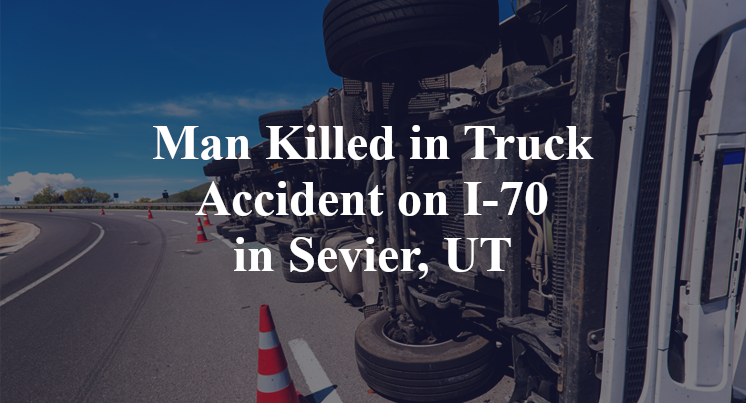
Officials indicate that, for as yet unknown reasons, an 18-wheeler was involved in a single-vehicle collision in which it apparently overturned. The man who had been behind the wheel of the truck reportedly sustained fatal injuries over the course of the accident. Additional details pertaining to this incident—including the identity of the victim—are not available at this point in time. The investigation is currently ongoing.
Commentary by Attorney Michael Grossman
When a single-vehicle crash involving an 18-wheeler ends in the driver’s death, the question isn’t just how the truck overturned—it’s what caused the driver to lose control in the first place? These types of crashes rarely happen without some contributing factor, and determining that is the key to understanding whether the incident was avoidable.
At this point, investigators haven’t said what led the truck to roll over, but there are several possibilities that need to be considered. Driver fatigue, distraction, medical events, and equipment failure are all common causes of single-vehicle commercial crashes. Pinpointing the cause will require pulling engine control module (ECM) data, reviewing driver logs, and conducting a mechanical inspection of the vehicle.
Load stability also needs to be looked at closely. An 18-wheeler carrying cargo that’s poorly secured or top-heavy is far more prone to tipping, especially during evasive maneuvers or on curves. If the load shifted inside the trailer, that could explain how the rollover occurred—regardless of how the driver was operating the truck. Investigators should be reviewing load records, securement methods, and whether the cargo was distributed according to federal standards.
And then there’s the question of company oversight. Was the driver operating within legal hours-of-service? Had the truck recently passed inspection? Was this a route the driver was familiar with, or one that required special handling? In cases I’ve worked, it’s often not just one mistake that causes a crash like this—it’s a chain of oversights that began well before the driver ever left the lot.
Key Takeaways:
- The reason for the rollover remains unknown, but ECM data and mechanical inspection will help clarify what went wrong.
- Cargo shift and improper load securement should be evaluated as possible contributing factors.
- Fatigue, distraction, or medical distress may have affected the driver’s ability to maintain control.
- A full investigation should include the trucking company’s maintenance, training, and scheduling practices.
- Even in single-vehicle crashes, the root cause often traces back to decisions made long before the crash occurred.

 call us
  Email Us
  Text us