
Lake Harbor, FL — May 21, 2025, Natalie Leavy was killed in a truck accident at about 5:55 a.m. on U.S. Route 27 near Mutt Thomas Road.
Authorities said a 2022 Nissan Altima was heading north when its driver lost control and veered into the path of an oncoming semi-truck. The truck hit the smaller vehicle, forcing to roll into its side.
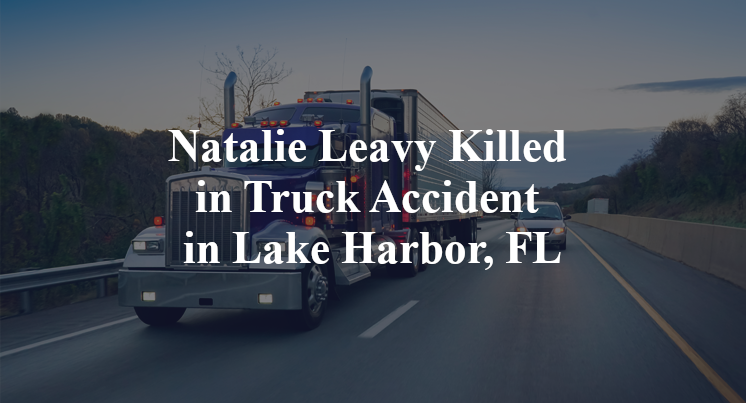
Nissan driver Natalie Leavy was pronounced dead at the scene of the crash, according to authorities. The truck driver was not injured.
Authorities have not released any additional information about the Palm Beach County crash at this time. The accident is still being investigated.
Commentary by Attorney Michael Grossman
When a crash like this makes the news, most people reading the brief headlines are left wondering: How could this happen? A car ends up in the path of a semi, the driver is killed and there’s very little detail beyond that. But from where I sit, having handled these cases for more than 30 years, it’s exactly the lack of detail that signals how many unanswered questions remain.
Authorities say the car lost control and veered into the path of an oncoming truck. If that’s accurate, it’s tempting to think that explains everything. But does it? That kind of phrasing often shortchanges the complexity of what really happens in these crashes. And more importantly, it puts the focus on the car without asking the necessary questions about the truck’s role.
Depending on whether the truck was traveling at highway speed, braking, swerving or stopped, the legal implications could shift dramatically. We don’t yet know:
- Whether the truck driver had time to react.
- What the truck’s onboard systems recorded, particularly the engine control module (ECM), which logs speed, braking, throttle input and more.
- If the truck had dash cams or in-cab cameras, which can offer direct visual evidence of how the crash unfolded.
- Whether the trucker was on the phone or distracted in any way at the moment of impact.
All of that is objective, retrievable evidence. But unless someone knows to look for it, and has the legal authority to obtain it, it might never come to light. That’s one of the key gaps in the typical police investigation.
Even if the truck driver was not at fault in this specific crash, that doesn’t let the trucking company off the hook from scrutiny. For instance:
- What training did the driver have?
- How was the driver screened before being hired?
- Did the company evaluate the driver’s ability to handle emergency situations?
- Was the vehicle properly maintained?
I’ve handled cases where the truck driver wasn’t outright reckless but should never have been behind the wheel to begin with. In one such case, the company put a driver on the road with a long history of performance problems and a hiring process that barely lasted 20 minutes. That wasn’t just bad luck. It was a predictable outcome of careless company practices.
This crash is still under investigation, which means the facts are still coming in. But that doesn’t mean people shouldn’t be asking questions right now. In fact, that’s the most critical time to start pushing for answers, before the evidence disappears, before memories fade and before key records get overwritten or lost.
From my experience, the truth rarely lines up neatly with the first version of events reported in the news. Getting to the bottom of a fatal 18-wheeler crash requires careful, often aggressive, evidence gathering, from ECM data and camera footage to call logs and hiring records. Only then can anyone start to understand who was responsible and what, if anything, could have prevented the crash.
Key Takeaways
- It’s unclear whether the semi had time to react or if the truck’s movement contributed to the crash.
- Objective evidence, like black box data and dash cams, may shed light on the moments before impact.
- Trucking company hiring and training policies should always be reviewed in fatal crashes, even if the driver isn’t clearly at fault.
- Early assumptions in news reports often leave out vital context; only an in-depth investigation can reveal the full story.
- Accountability depends on evidence, not speculation, and must include all responsible parties, not just the driver.

 call us
  Email Us
  Text us