
Smith County, TX — September 11, 2025, a man was injured due to a motorcycle versus car accident just after 1:45 p.m. along State Highway 64.
According to authorities, a 36-year-old man was traveling on an eastbound Suzuki motorcycle on S.H. 64 at the Old Omen Road intersection when the accident took place.
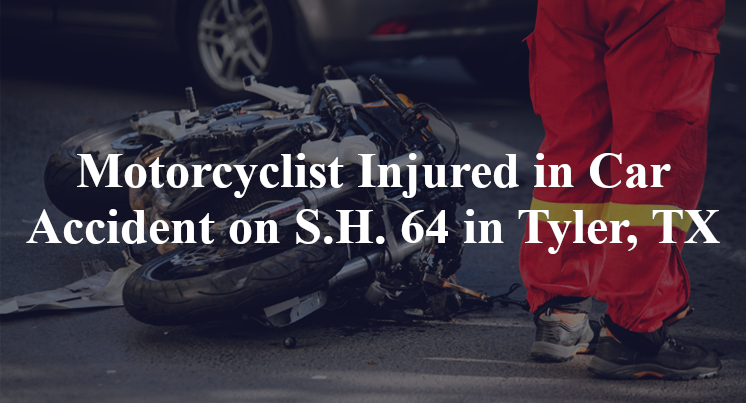
Officials indicate that, for reasons yet to be confirmed, the motorcycle allegedly took faulty evasive action. It was consequently involved in a collision with the rear-end of an eastbound Jeep Patriot. The man who had been riding the motorcycle reportedly sustained serious injuries over the course of the accident. Additional details pertaining to this incident—including the identity of the victim—are not available at this point in time. The investigation is currently ongoing.
Commentary by Attorney Michael Grossman
Crashes between motorcycles and passenger vehicles are often described in simple terms—one vehicle braked, the other reacted poorly. But the real story is rarely that straightforward. To understand why someone ended up seriously injured, it’s important to look past surface-level assumptions and consider what may have been overlooked.
1. Did the authorities thoroughly investigate the crash?
The report mentions “faulty evasive action,” but that kind of description doesn’t explain much. Did investigators reconstruct the motorcycle’s approach to the Jeep? Was speed measured, or braking distance evaluated? Did they determine whether the Jeep made any sudden movements that forced the rider to react? These are technical questions that require more than a basic scene review. Without detailed analysis, the label of “evasive action” risks becoming a catch-all explanation instead of a fact-based conclusion.
2. Has anyone looked into the possibility that a vehicle defect caused the crash?
For motorcycles, even minor defects can have major consequences. A sticky throttle, worn brake components, or suspension problems could easily cause a rider’s maneuver to go wrong. On the Jeep’s side, defective brake lights or a sudden mechanical fault could explain why the motorcyclist collided with its rear end. Unless both vehicles are inspected carefully, mechanical issues may never be considered, even though they could be central to the crash.
3. Has all the electronic data relating to the crash been collected?
Motorcycles like modern Suzukis often carry onboard systems capable of recording throttle, braking, and speed data. The Jeep may also contain a recorder that shows whether and when braking occurred. External sources—such as dashcams, nearby cameras, or GPS logs—could further clarify the sequence of events. If investigators haven’t pulled that data, the picture of what actually happened remains incomplete.
When a crash leaves someone badly hurt, the explanations that come out early are often the least reliable. A serious effort to uncover the truth requires going beyond what “seems likely” and digging into what the evidence actually shows.
Takeaways:
- Labels like “faulty evasive action” don’t replace detailed crash reconstruction.
- Both vehicles should be inspected for possible defects that could have influenced the crash.
- Onboard and external data can help confirm exactly how the collision unfolded.

 call us
  Email Us
  Text us