
Bexar County, TX — February 28, 2025, one person was injured in a single-vehicle motorcycle accident at approximately 9:00 p.m. along Interstate Highway 410.
According to authorities, a 43-year-old man was traveling on a southbound Honda motorcycle on I.H. 410 at the I.H. 10 junction when the accident took place.
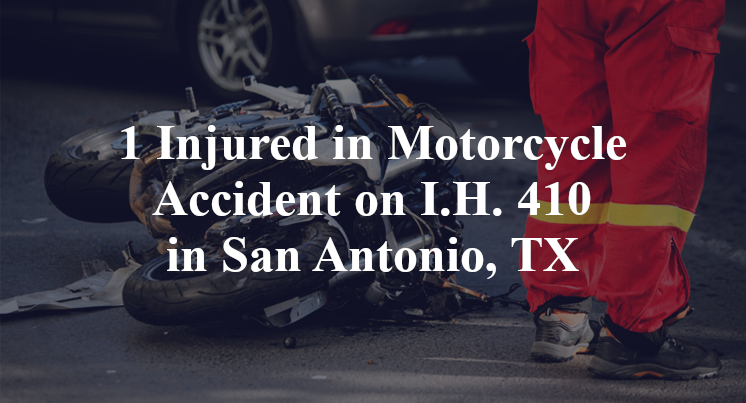
Officials indicate that, for as yet unknown reasons, the motorcycle failed to safely maintain its lane of travel. It was consequently involved in a single-vehicle collision in which it struck a guardrail. The man reportedly suffered serious injuries over the course of the accident. Additional details pertaining to this incident—including the identity of the victim—are not available at this point in time. The investigation is currently ongoing.
Commentary by Attorney Michael Grossman
When a motorcycle rider crashes without another vehicle involved, it’s easy to point to rider error and move on. But that mindset often leaves important questions on the table. These crashes can be just as complex as any multi-vehicle collision—sometimes more so. That’s why they demand the same level of scrutiny.
Was the crash thoroughly investigated?
When a motorcycle hits a guardrail, the circumstances surrounding that impact need to be carefully mapped out. Did the rider drift? Was there a last-second correction? Did investigators measure and document the bike’s path before the crash? These are the kinds of details that matter, especially when there’s no one else at the scene to describe what happened. A basic write-up doesn’t cut it. Some departments take the time to do full reconstructions using laser mapping and vehicle path modeling. Others don’t. If those tools weren’t used here, we’re left to wonder whether the real cause of the crash will ever be clear.
Has anyone looked into possible vehicle defects?
Lane-keeping issues on a motorcycle can point to several potential mechanical problems. A faulty steering component, an issue with the tires, or uneven braking could easily lead to a loss of control. Honda motorcycles are known for reliability, but no machine is immune to wear, neglect, or unexpected failure. If no one examined the bike after the crash—or worse, if it was written off as rider misjudgment from the start—then we may never know if something on that motorcycle failed when it mattered most.
Has all the electronic data been collected?
While motorcycles usually don’t store as much internal data as cars, many riders use GPS apps, smart helmets, or even ride-tracking software. If that data exists, it could show whether there was a sudden swerve, change in speed, or braking event just before the crash. That kind of information adds valuable context to what happened and when. If no one checks for it, those digital clues disappear quickly. It’s a missed opportunity that happens far too often in single-rider wrecks.
These crashes may seem simple on the surface, but when a rider is seriously hurt, assumptions aren’t enough. The right questions—and the effort to answer them—are what make the difference.
- Scene reconstruction is essential in single-bike crashes but often overlooked.
- Mechanical failures, even rare ones, must be ruled out through a detailed inspection.
- GPS or ride-tracking data could reveal what happened in the final moments before impact.

 call us
  Email Us
  Text us