
Montgomery County, TX — August 16, 2024, a man and a woman were injured due to a motorcycle accident just after 10:30 p.m. along Davis Street.
According to authorities, a 39-year-old man and a 47-year-old woman were traveling on an eastbound Kawasaki motorcycle on West Davis Street in the vicinity east of the House Road intersection when the accident took place.
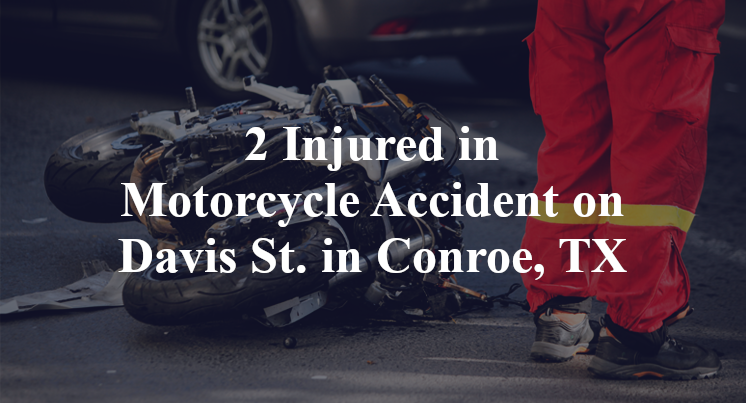
Officials indicate that, for as yet unknown reasons, the motorcycle failed to safely maintain its lane of travel. It was consequently involved in a single-vehicle collision in which it apparently overturned. Both the man and the woman reportedly sustained serious injuries over the course of the accident. They were each transported to local medical facilities by EMS in order to receive necessary treatment. Additional details pertaining to this incident—including the identities of the victims—are not available at this point in time.
Commentary by Attorney Michael Grossman
When a motorcycle crashes without another vehicle involved, the usual explanation tends to land squarely on the rider. But serious injuries in a single-vehicle incident deserve more than quick assumptions. There are always deeper questions that can—and should—be asked.
Did the authorities thoroughly investigate the crash?
Crashes like this one are often treated as simple loss-of-control events. But what exactly caused the bike to veer off its path? Was the rider avoiding something? Was there a mechanical issue or a sudden obstacle? A proper investigation would map out the scene, review the angle of the bike’s path, and consider how the riders’ movements factored into the event. Not every investigator brings the same level of experience or tools to motorcycle crashes, and that variation can leave important questions unanswered.
Has anyone looked into the possibility that a vehicle defect caused the crash?
With motorcycles, the margin for error is slim—and even minor mechanical failures can have major consequences. A stuck throttle, faulty brakes, or problems with suspension could all lead to a sudden loss of control. If no one inspected the Kawasaki closely after the crash, there’s a chance those details were overlooked. The absence of another vehicle doesn’t mean the motorcycle itself didn’t contribute to the wreck.
Has all the electronic data relating to the crash been collected?
While motorcycles tend to have less onboard data than passenger vehicles, newer models sometimes carry systems that log basic information. That includes speed, lean angle, and braking behavior. Phones carried by either rider might also hold GPS or app-based data that could help build a clearer timeline. If the crash occurred near businesses or traffic signals, nearby camera footage could also be useful. But those leads disappear quickly if no one acts on them.
Even without a second vehicle involved, a crash with serious injuries still calls for a full investigation. Anything less risks missing the real story of what went wrong.
Takeaways:
- Solo motorcycle crashes should be investigated with the same rigor as multi-vehicle wrecks.
- Small mechanical failures can lead to major outcomes and deserve inspection.
- Digital evidence—from the bike, phones, or nearby cameras—can help fill in the blanks.

 call us
  Email Us
  Text us