
Tyler County, TX — September 18, 2025, Michael Marino was injured as the result of an 18-wheeler accident at around 3:25 a.m. along FM 92.
Initial details about the crash say that it happened a few miles north of Spurger.
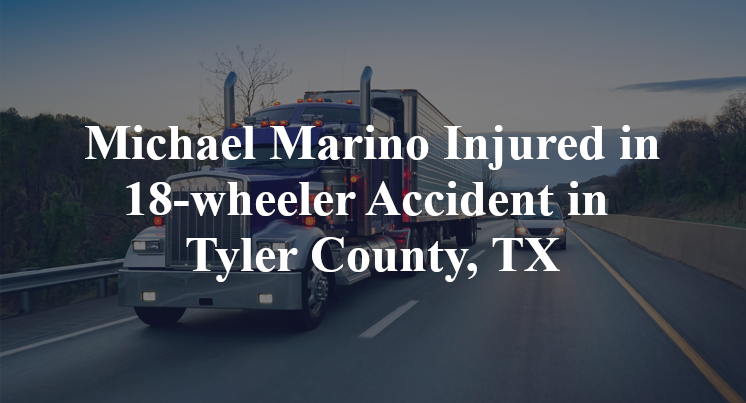
According to officials, 58-year-old Michael Marino was in a Toyota Corolla traveling southbound. A Mack truck was going the same direction. That truck reportedly went on the wrong side of the road in a no passing zone, following which the vehicles collided.
Michael Marino was seriously injured due to the accident. Authorities recommended a charge for the truck driver.
Commentary by Attorney Michael Grossman
When an 18-wheeler crosses into the wrong lane in a no-passing zone and causes a crash, it’s natural to assume the driver made a reckless decision and that a citation or charge wraps things up. But with commercial vehicles, that’s rarely the end of the story.
The real question isn’t just what happened—it’s why the driver made such a clearly unsafe move in the first place. Was the driver trying to meet an unrealistic delivery deadline? Were they poorly trained, under pressure, or distracted by dispatch instructions? Did the company that put that driver on the road have a history of overlooking safety protocols?
From what I’ve seen handling hundreds of commercial vehicle cases, moves like these often trace back to deeper problems inside a trucking company’s operation. A hasty maneuver in a no-passing zone might reflect more than just one bad decision—it could be a symptom of a whole workplace culture that prioritizes speed over safety.
That’s why it’s not enough to stop with the driver. A proper investigation digs into the company’s role, including how the driver was trained, scheduled, and monitored. Only then can investigators determine whether this crash was a one-off mistake or something preventable that never should’ve happened in the first place.
Key Takeaways
- A dangerous maneuver in a no-passing zone may point to deeper systemic problems behind the scenes.
- Investigations must explore why a truck driver made such a risky choice—not just what the choice was.
- Employer practices around training, scheduling, and supervision often shape a driver’s behavior.
- Accountability in commercial truck crashes requires looking past citations and into company conduct.

 call us
  Email Us
  Text us