
St. Francis County, AR — July 13, 2024, Larry Jemison was killed and one person was injured following a multi-truck accident at 6:00 a.m. on Interstate 40.
The Arkansas Department of Public Safety released information about the crash, saying it happened outside of Palestine on westbound lanes of I-40 near mile marker 230.
According to state police, 43-year-old Larry Jemison was in a Chevy Tahoe going along westbound lanes when traffic slowed due to a previous accident. Approaching that traffic, authorities say a Volvo semi-truck failed to slow down, and it crashed into a Freightliner. This in turn caused the Freightliner to crash into Jemison and at least one other semi-truck.
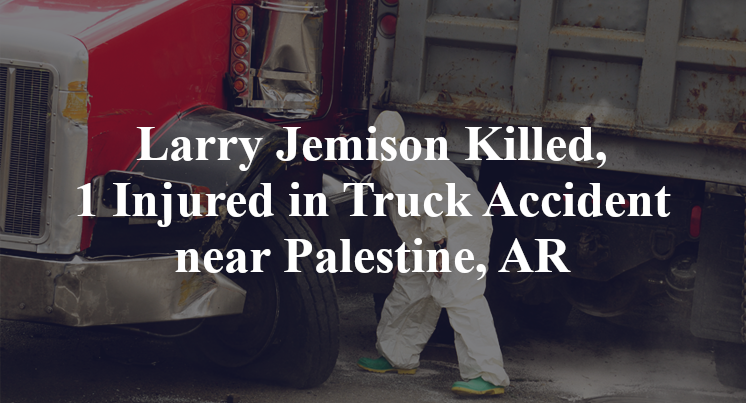
Due to the collision, Jemison sustained fatal injuries. The driver of the Volvo had unspecified injuries. There didn’t appear to be any other confirmed injuries. Right now, it’s unclear if charges or citations are being considered. Investigations continue.
Commentary by Attorney Michael Grossman
While it’s possible something unusual or unavoidable happened here, the most common reason a truck crashes into traffic is that the driver made a mistake. As simple as that may sound, seeing there’s accountability for someone losing their life requires far more thorough investigations than just considering what an individual driver did wrong. Having handled hundreds of commercial vehicle accident cases, I’ve seen many situations like this where a driver’s mistake was the inevitable result of their employer’s culture of irresponsible practices.
For one, trucking companies often enforce unrealistic delivery schedules that push drivers to cut corners and engage in behavior a more safety-conscious company would discourage. These schedules can create an environment where drivers feel pressured to speed, make dangerous maneuvers, skip mandatory rest breaks, try to beat traffic lights, forego pre-trip safety checks, and put off vital maintenance that could prevent a catastrophic mechanical failure. Inevitably, that’s going to get someone hurt or killed.
Similarly, inadequate training and hiring practices also contribute significantly to these kinds of accidents. More reputable companies take the time to thoroughly train drivers and conduct rigorous background checks and drug testing to ensure their drivers live up to the high standards expected of commercial truck drivers. Less responsible companies, however, rush new drivers through training, fail to look into a driver’s history, or otherwise ignore patterns of reckless driving because they just want warm bodies behind the wheel. They figure if something goes wrong, they can just cut that driver loose as a “bad apple” only to go out and hire someone who’s bound to do the same thing all over again.
Here’s why all of this matters. Simply put, none of the hundreds of families I’ve helped over the years wanted some bad guy to blame. They didn’t want the easy answers. They wanted accountability. If a truck driver makes a mistake, they deserve to face appropriate consequences. But if that mistake was the inevitable result of the driver’s work environment, putting all of the blame on the driver lets that irresponsible company off the hook. Recognizing that more than one person can be held responsible for their actions helps to ensure a just resolution for a deadly wreck as well as a path to put an irresponsible company on the straight-and-narrow before their actions harm any other families. So as investigations continue into what exactly caused this crash, it’s important to make sure those investigations extend far beyond the crash scene itself.

 call us
  Email Us
  Text us