
Cass County, IA — April 22, 2025, Jon Hill was injured in a truck accident at about 8:10 a.m. at Oxford Road and 630th Street/U.S. Route 71.
Authorities said a pickup was headed west on Oxford Road after stopping at a stop sign when it was hit by a 2008 Peterbilt semi-truck going north on U.S. 71.
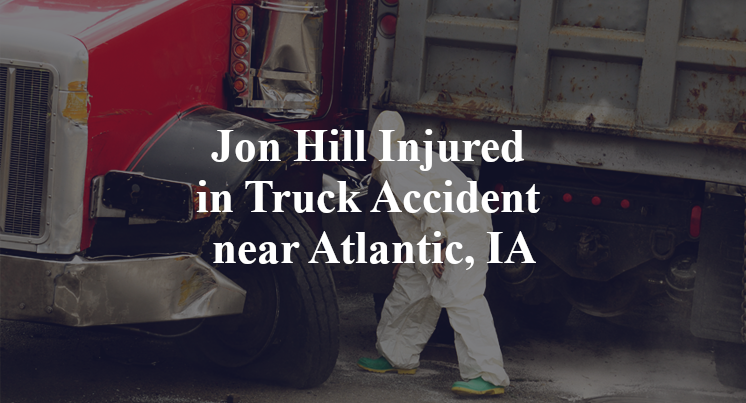
Pickup driver Jon Hill, 83, of Cumberland was transported to an Omaha hospital with undisclosed injuries after the crash, according to authorities, while the truck driver was not hurt.
Authorities have not released any additional information about the Cass County crash at this point. The accident is still being investigated.
Commentary by Attorney Michael Grossman
Crashes at intersections like Oxford Road and U.S. Route 71 often come down to the most basic but critical question in traffic law: who had the right of way, and did the other driver respect it? In this case, a pickup entered the highway from a stop sign and was struck by a northbound semi-truck. That sets up a scenario that deserves close scrutiny, not just of the pickup driver’s decision, but of whether the commercial vehicle was being operated as safely as the law requires.
When a driver stops at a stop sign and then proceeds into an intersection, they’re required to yield to cross traffic. But that obligation doesn’t cancel out the truck driver’s duty to anticipate that a vehicle might enter their path, especially in rural areas where intersections may have limited visibility or inconsistent signage. Professional drivers are expected to approach every intersection with the understanding that someone could misjudge distance or speed, and to be ready to respond accordingly.
That responsibility is particularly important when the commercial vehicle is a fully loaded semi-truck. These vehicles take longer to stop and are far more dangerous in a collision. Because of that, the law holds truck drivers to a higher standard: slower speeds approaching intersections, increased awareness of traffic patterns and a readiness to brake or maneuver if another driver makes an imperfect decision.
Investigators will need to look closely at several key details: Was the truck speeding? Was there enough sight distance for both drivers to see one another? Was the intersection clearly marked, and were there any visual obstructions like trees, hills or weather conditions that made it harder to judge a safe gap in traffic?
They’ll also need to determine whether the pickup driver had a clear understanding of the truck’s speed. Many rural roads give the illusion of a safe opening when, in fact, an approaching truck is covering ground faster than it appears. That’s a common factor in crashes like this and one that doesn’t automatically excuse either party. It just highlights the importance of careful, defensive operation by all involved.
At the end of the day, when a commercial truck hits a vehicle entering from a side road, the issue isn’t just who was legally in the right. It’s whether the truck driver had a real opportunity to prevent the crash, and whether the person crossing the road had a fair chance to judge the situation accurately. Those answers can’t be assumed. They have to be established through a detailed, evidence-driven investigation. Because crashes like this are rarely about one single bad decision. They’re about a series of decisions that, together, added up to something no one could walk away from unchanged.

 call us
  Email Us
  Text us