
Lampasas County, TX — July 11, 2024, Joe Rose was injured due to a motorcycle accident shortly before 5:15 p.m. along Farm to Market 2657.
According to authorities, 42-year-old Joe Rose was traveling on a southbound Harley-Davidson motorcycle on F.M. 2657 at the F.M. 2808 intersection when the accident took place.
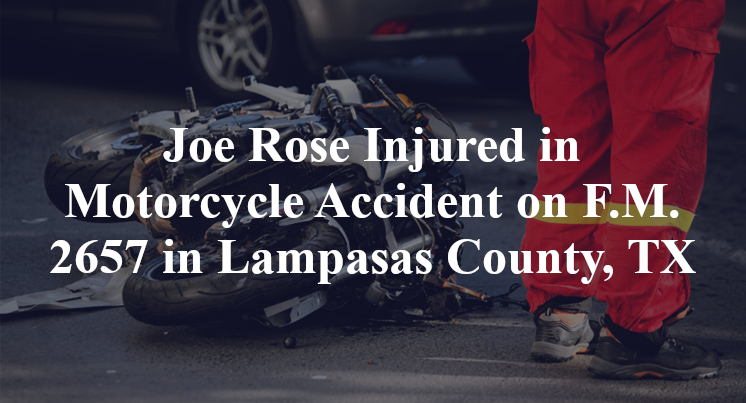
Officials indicate that, for as yet unknown reasons, an eastbound Jeep Cherokee attempted a left turn onto F.M. 2657 from F.M. 2808 at an apparently unsafe time, failing to yield the right-of-way at a stop sign. A collision consequently occurred between the motorcycle and the front-left quarter of the Jeep.
Rose reportedly sustained serious injuries over the course of the accident; he was transported to a local medical facility by EMS in order to receive necessary treatment. Additional details pertaining to this incident are not available at this point in time.
Commentary by Attorney Michael Grossman
Motorcycle crashes often carry a level of complexity that quick reports don’t reflect. When a rider is struck by a turning vehicle, the visible damage might tell part of the story—but real understanding requires going deeper.
1. Did the authorities thoroughly investigate the crash?
In left-turn collisions, especially involving motorcycles, accurate reconstruction is essential. That includes determining the speed and trajectory of both vehicles, reviewing the rider’s lane position, and measuring sightlines at the intersection. Did officers examine whether the Jeep had a clear view or assess how long it had been stopped? These steps take time and technical skill—and not every agency takes them.
2. Has anyone looked into the possibility that a vehicle defect caused the crash?
Turning across traffic and failing to yield often points to a decision error, but mechanical failure can just as easily play a part. If the Jeep’s steering was delayed, its brakes failed to hold, or an assist system gave inaccurate input, those issues would be hidden without an inspection. It’s rare that such checks happen without someone pushing for them.
3. Has all the electronic data relating to the crash been collected?
The most reliable version of events is often recorded inside the vehicles. The Jeep’s data could show whether the turn was gradual or abrupt, how fast it moved, and whether the driver hit the brakes. The motorcycle may not store the same kind of data, but helmet cams, phones, or nearby surveillance could offer critical visual evidence. If that digital trail isn’t followed, key moments might go unexplored.
Assumptions about fault don’t replace a full investigation. Getting to the truth means looking at the vehicles, the data, and the timing—not just the scene after the fact.
Takeaways:
- Motorcycle-involved crashes demand precise reconstructions to confirm timing and visibility.
- Vehicle malfunctions may cause or contribute to poor turning decisions.
- Onboard and camera data can uncover missed details about driver actions.

 call us
  Email Us
  Text us