
Canton Township, PA — October 6, 2025, two people were injured due to a garbage truck accident at approximately 6:45 a.m. along U.S. Highway 40.
According to authorities, the accident occurred at the intersection of U.S. 40 and McKee Road.
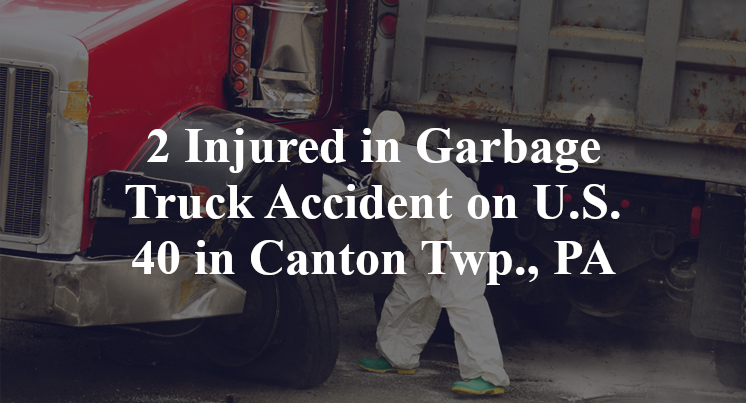
Details surrounding the accident remain scarce. Officials indicate that, for as yet unknown reasons, a collision occurred between a garbage truck, a pickup truck, and an SUV. Two people reportedly sustained serious injuries over the course of the accident; one was flown to an area medical facility in order to receive immediate treatment, and the other was driven via ground ambulance. Additional information pertaining to this incident—including the identities of the victims—is not available at this point in time. The investigation is currently ongoing.
Commentary by Attorney Michael Grossman
When a crash involves a garbage truck and multiple other vehicles, the first question to ask isn’t just who hit whom—but what was happening with that truck before the collision. Garbage trucks operate in a rhythm of starts, stops, and turns that can make them unpredictable to nearby drivers, but that doesn’t mean serious crashes like this are inevitable. Something specific caused these three vehicles to come together, and until investigators find that cause, there’s no way to know whether it was human error, mechanical failure, or a combination of both.
At this point, we don’t know whether the garbage truck was entering traffic, turning, or stopped when the impact occurred. Each possibility raises different concerns. Was the truck visible to approaching vehicles? Were its hazard lights or brake lights functioning properly? Was the driver following proper procedure before entering the intersection? Those are the kinds of questions that determine whether this was a preventable event.
Garbage trucks often operate under time pressure and in conditions that demand constant awareness—early hours, narrow roads, and heavy traffic. That’s why training and company oversight are so critical. In cases I’ve handled involving waste-hauling companies, it wasn’t uncommon to find that drivers were working long shifts with little rest, or that maintenance schedules were neglected because the trucks were needed on the route every day. Those small lapses can set the stage for major collisions.
The physical evidence in this crash will be key: brake marks, black box data, onboard cameras, and driver cell phone records can all help explain what the garbage truck and other vehicles were doing before impact. Without that information, any assumptions about fault would be premature.
For now, all we can say is that two people were seriously hurt in a situation that likely had multiple contributing factors. The next step is to gather and preserve the evidence that can reveal what truly happened at that intersection—and who, if anyone, failed to act safely.
Key Takeaways:
- It’s unclear how the garbage truck and other vehicles came together—turning, merging, or stopping all remain possibilities.
- Evidence such as black box data, camera footage, and maintenance records will be crucial to understanding the sequence of events.
- Company training, scheduling, and vehicle upkeep should be reviewed for potential contributing factors.
- Garbage truck operations demand extra caution due to their frequent stops and limited maneuverability.
- Accountability depends on uncovering every factor—human, mechanical, or procedural—that led to this crash.

 call us
  Email Us
  Text us